
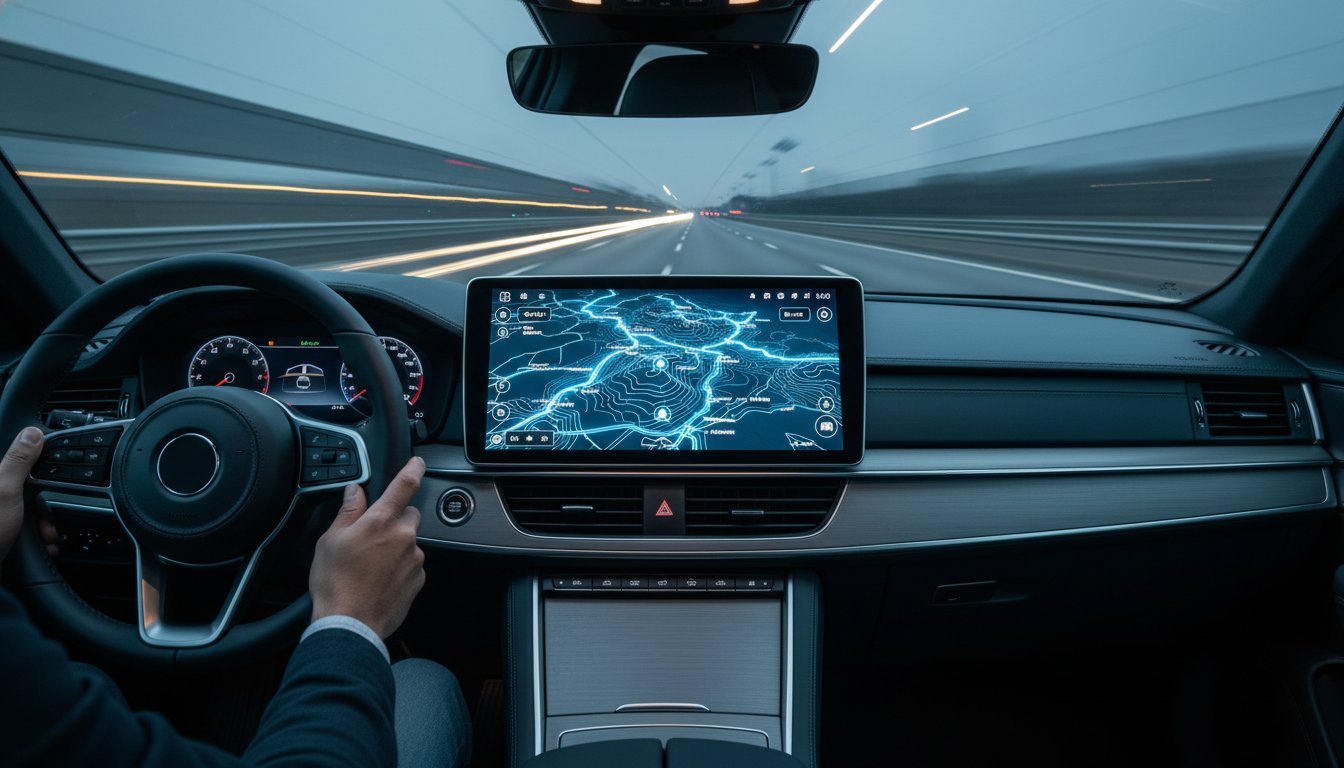
Your smartphone is no longer the most reliable tool for high-performance driving in 2026. We know you're fed up with phone battery drain and the mess of suction-cup mounts blocking your view. This guide gives you the hard facts on the latest sat nav tech, covering everything from integrated Apple CarPlay screens to dedicated standalone GPS units. You'll learn how to achieve a professional-looking interior upgrade that delivers crystal-clear mapping and seamless audio integration.
The ultimate 2026 navigation setup relies on 2-DIN head units featuring high-gain GPS antennas to ensure you never lose signal in remote UK areas. Modern systems now prioritise offline mapping over data-heavy streaming to prevent lag during critical turns. By upgrading to a dedicated in-dash system, you eliminate the high costs often associated with outdated factory map updates while gaining a massive, high-resolution interface. We're looking at top-tier hardware that combines MOSFET power with precision routing for the best driving experience possible.
Key Takeaways
- Understand the hardware advantage of dedicated satellite systems using multi-constellation support for pinpoint precision that smartphones cannot match.
- Compare integrated 2-DIN multimedia units against portable mounts to see how permanent upgrades boost vehicle resale value.
- Learn to select the ultimate sat nav setup by matching your dashboard fitment to your specific driving requirements.
- Discover how 2026 screen technology uses high-brightness, anti-glare capacitive touchscreens for crystal-clear visibility in all conditions.
- Find out how professional tech integration eliminates "cable spaghetti" on your dashboard for a clean, factory-standard finish.
What is a Sat Nav and Why is Dedicated Hardware Better Than a Smartphone?
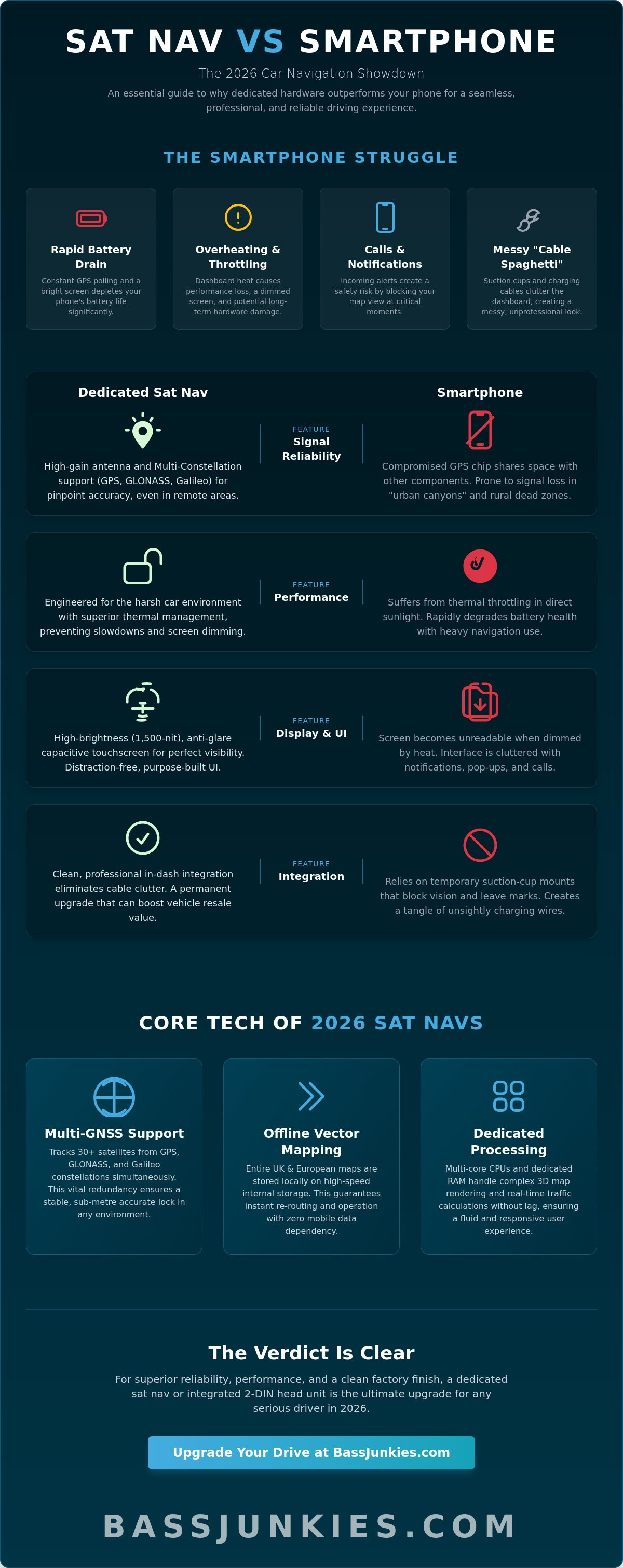
A dedicated sat nav is a standalone electronic device engineered specifically to provide precise vehicle routing using Global Positioning System data. These units utilize high-gain internal antennas and locally stored map data to ensure constant operation without relying on a mobile phone signal. Dedicated hardware beats a smartphone because it offers superior signal reliability, better thermal management, and a distraction-free interface designed for road safety. While phones are multi-purpose tools, a dedicated system is a specialist instrument built for the harsh environment of a car dashboard.
Smartphone GPS chips are often compromised by their size. They share space with processors and cellular modems, which limits their raw signal-grabbing power. A professional Automotive navigation system uses a much larger, dedicated ceramic patch antenna. This hardware allows the device to track multiple satellite constellations simultaneously, including GPS, GLONASS, and Galileo. This results in pinpoint accuracy even when your phone is struggling to find a single bar of 5G signal. If you want the ultimate setup, you should view stereo screens that integrate these high-performance receivers directly into your dash.
The Problem with Smartphone Navigation
Phones are fragile and weren't built for the dashboard. Stick a smartphone on a mount in a UK summer and it'll bake. Thermal throttling kicks in fast, slowing the processor and dimming the display until the map is unreadable. This intense heat, combined with the massive power draw of constant GPS polling, causes rapid battery degradation. You'll quickly find your phone's battery life tanking after just a few months of heavy use. There's also the interruption factor. A phone call or a stray notification can block your view at a crucial motorway junction, creating a genuine safety risk.
Reliability in Remote Areas
Dead zones are a common reality across the UK. When your mobile data vanishes in the Lake District or the Scottish Highlands, a phone-based map often fails to recalculate or even load the next turn. Dedicated units carry the entire UK and European map library on internal storage, providing instant re-routing without needing a single byte of data. These receivers also feature superior antenna gain. This allows them to maintain a solid lock in "urban canyons" like central London or Manchester, where tall buildings usually scramble mobile GPS signals. If you're looking for a rock-solid solution, our team provides expert advice on the best 2-DIN fitments to keep you on track.
Core Technologies and Features of 2026 Satellite Navigation Systems
Modern sat nav systems in 2026 rely on multi-constellation satellite tracking and high-speed hardware processing to deliver instant, centimetre-perfect positioning. These units use capacitive touchscreens with 1,000+ nit brightness levels to remain visible in all lighting conditions. Integrated Wi-Fi modules replace outdated TMC data, providing real-time traffic streams for precise arrival times. Modern hardware requires dedicated RAM and multi-core CPUs to handle complex 4K map rendering without lag. This combination of tech ensures your navigation never drops out, even in dense urban canyons or remote rural areas.
Global Satellite Constellations Explained
Your sat nav no longer relies on a single source for location data. By 2026, the best units utilize "Multi-GNSS" support, which tracks signals from the American Global Positioning System (GPS), the European Galileo, and the Russian GLONASS networks. This redundancy is vital for maintaining a lock in "urban canyons" where tall buildings block the sky. When one system loses line-of-sight, the others fill the gap instantly.
Modern sat navs track 30+ satellites simultaneously for sub-metre accuracy. This massive increase in data points means your vehicle's position is updated multiple times per second. It prevents the frustrating "jumping" effect seen on older hardware when driving under heavy tree cover or through tunnels. It's about total reliability and crystal-clear positioning every time you hit the road.
Display and Interface Innovations
The days of mushy, unresponsive resistive screens are over. 2026 head units feature high-definition capacitive touchscreens that react to the lightest touch, just like a flagship smartphone. Visibility is the priority here; high-end units now boast 1,500-nit brightness levels and advanced anti-glare coatings. This ensures the map remains visible even when the UK sun is hitting your dashboard at a direct angle.
- Capacitive Tech: Supports multi-touch gestures like pinch-to-zoom for rapid map inspection.
- OLED Panels: High-end 2-DIN units now use OLED for deep blacks and 4K resolution, making text incredibly sharp.
- Anti-Glare: Chemical etching on the glass surface reduces reflections by up to 90% compared to 2020 models.
If you want to upgrade your visual experience, you can view high-performance stereo screens that bring this tech to your current vehicle.
Live Traffic and Processing Power
Processing speed is the backbone of a high-octane navigation setup. A modern sat nav needs at least 4GB of RAM and a quad-core CPU to calculate complex routes in under two seconds. This hardware power allows for seamless 3D terrain rendering and instant re-routing when you miss a turn. Without a fast processor, your map will stutter, leading to missed exits and driver frustration.
Live traffic integration has also evolved. While older systems used Traffic Message Channel (TMC) via FM radio, 2026 units use Wi-Fi-connected data streams. This provides "crowdsourced" traffic data that is accurate to within 10 metres of a jam. You get thumping performance and real-time updates that save you hours in gridlock every month. It's a massive leap forward for anyone serious about their time on the road.
Portable Sat Nav vs. Integrated Multimedia Head Units
Integrated multimedia head units are the definitive choice for drivers seeking a permanent, high-performance sat nav solution that integrates with the vehicle's electronics. Portable units provide a low-cost, flexible alternative for those moving between vehicles or driving older cars. Choosing an in-dash system eliminates messy cables and improves safety by keeping the windscreen clear. These units also increase the resale value of your vehicle by providing a modern, factory-style interface. Most high-end head units now include DAB+, Bluetooth, and smartphone mirroring as standard.
Suction cups are a temporary fix for a permanent problem. They clutter the dash, block your view, and leave unsightly rings on the glass. From an expert junkie perspective, a dangling power cable is a massive distraction that ruins the aesthetic of a clean interior. A 2-DIN integrated screen creates a seamless look that mimics high-end factory specs. This OEM+ finish is a major selling point for used car buyers in the UK market, often returning more than the initial cost of the hardware at resale.
Audio synergy is a major advantage of the in-dash route. Your navigation prompts play through your main car audio speakers rather than a weak, tinny internal device speaker. The system automatically lowers the music volume during instructions. This ensures crystal-clear directions even when you are blasting a heavy bassline. You get DAB+ radio, Bluetooth streaming, and GPS navigation in a single, high-density chassis that cleans up your dashboard entirely.
The Case for Portable Units
Portable units remain a solid choice for specific use cases. They are the go-to solution for rental cars where you cannot modify the interior. Owners of classic cars often prefer them to avoid cutting into original dashboards. Top brands like Garmin and TomTom offer specialized sat nav models for HGVs and Caravans. These devices include specific routing for bridge heights and weight limits. They offer a lower entry price point for basic A-to-B navigation without installation costs.
The Superiority of In-Dash Integrated Screens
The stereo screens revolution has changed the game for modern drivers. Most integrated units now feature Apple CarPlay and Android Auto. This allows you to run Waze or Google Maps directly on a high-resolution display. You get the benefit of live traffic data combined with the power of a dedicated GPS antenna. Using bespoke fitting kits ensures a factory-standard finish in almost any vehicle. You can explore the stereos collection for high-performance Pioneer and Alpine options that offer superior MOSFET power and lightning-fast touch response.
How to Choose the Right Navigation Setup for Your Ride
Selecting the perfect sat nav setup starts with your vehicle's dashboard architecture and your specific mileage needs. First, confirm your fitment size; most modern cars utilize a 2-DIN (double DIN) aperture for large touchscreens, while older or classic models may require a 1-DIN unit with a motorized flip-out screen. Your driving profile dictates the software; professional HGV drivers require bridge height data, whereas commuters should prioritize units with wireless smartphone integration for live traffic. Ensure your chosen hardware includes UK and European mapping if you plan cross-border trips. Finally, plan for a professional installation to guarantee the GPS antenna has a clear line of sight and the wiring remains interference-free.Matching Tech to Vehicle Type
Performance cars demand hardware with high-speed processors and slimline chassis designs. These units provide lightning-fast route recalculation without adding unnecessary bulk behind the dashboard. Many high-end units also feature MOSFET power stages to ensure your audio sounds as sharp as your maps look. Motorhome owners must opt for specialized software that allows for vehicle height, width, and weight inputs to prevent illegal or dangerous routing through narrow lanes. For total vehicle protection, we recommend units that support dash cam integration. This creates a secondary safety layer by displaying real-time footage directly on your crystal-clear main screen.
Connectivity and Updates
Modern systems have moved beyond tedious PC-based updates. Look for units featuring built-in Wi-Fi for over-the-air (OTA) map refreshes. This ensures your road data is current without ever leaving the driver's seat. Bluetooth 5.0 is the baseline for 2026; it delivers lag-free voice prompts and crystal-clear hands-free calling. A high-performance sat nav unit should also include DAB+ digital radio for uninterrupted audio on long hauls. For the cost-conscious UK driver, "Speed Camera Alerts" and live fuel price data are essential features that pay for themselves. These tools help you avoid heavy fines and locate the cheapest petrol in your specific post-code.
- Step 1: Verify 1-DIN or 2-DIN dash fitment to ensure a flush, factory-style finish.
- Step 2: Select software based on vehicle dimensions or commuting frequency to avoid traffic bottlenecks.
- Step 3: Confirm mapping coverage for your intended travel zones, including Full European options for continental tours.
- Step 4: Demand Wireless CarPlay and Android Auto for seamless phone syncing and instant app access.
- Step 5: Book a professional install for clean signal integrity and expert hidden cable management.
Ready to overhaul your dashboard with the latest tech? Browse our massive range of high-performance stereo screens here.
Why Professional Tech Integration Beats a DIY Suction Cup
Professional sat nav integration provides superior reliability, security, and aesthetics compared to portable DIY units. While a suction cup mount is a temporary fix, a hard-wired in-dash system eliminates dangling cables and ensures a permanent, theft-resistant fit. Bassjunkies brings 30 years of high-octane car tech expertise to every install, ensuring that your GPS antenna is positioned for maximum signal gain and your hardware integrates seamlessly with existing vehicle electronics. Professional fitting guarantees your navigation system functions as a stable hub for your entire in-car entertainment setup without the clutter of "cable spaghetti" across your dashboard.
We have spent three decades perfecting the art of car tech integration. Our approach eliminates the mess of wires that typically plague DIY setups. Every cable is routed behind the dashboard, fused correctly, and secured to prevent annoying rattles. This isn't just about looks; it's about electrical integrity and preventing interference with other vehicle systems. We provide expert advice on choosing the ultimate accessories, from bespoke fascia kits to steering wheel control interfaces, ensuring a factory-standard finish every time.
Signal strength is non-negotiable for accurate navigation. We use high-mount or external GPS antennas that bypass the signal interference often caused by heated windscreens or metallic window tints. You get thumping signal strength that stays locked on, even when driving through dense urban canyons or remote rural areas. This technical precision is why Bassjunkies remains the UK’s top choice for enthusiasts who demand performance over compromises.
The Pitfalls of DIY Mounting
Suction cups are a major safety liability. They frequently fail during temperature swings, causing the device to fall off mid-drive and create a dangerous distraction. A device stuck to the glass also blocks your peripheral vision, which can lead to MOT failures or accidents. Beyond safety, a visible sat nav is a magnet for thieves. A bolted-in, integrated head unit is significantly harder to steal and doesn't leave tell-tale ring marks on the glass that signal "valuable tech inside" to opportunistic criminals.
Building the Ultimate Cockpit
View your navigation screen as the brain of your sound system. It controls the signal, the EQ, and the timing for your entire setup. To get the most out of your cabin, pair your new stereo screens with professional sound deadening. This reduces road noise by a measurable 3dB to 5dB, creating a silent floor for your music and crystal-clear voice prompts from your nav. It transforms a standard interior into a premium, high-performance environment designed for the serious driver.
Ready to upgrade your drive with the latest in-dash technology? Explore our massive range of sat nav stereos and screens and get the expert edge today.
Lock In Your 2026 Navigation Upgrade Today
Your drive deserves more than a glitchy smartphone mount or a shaky suction cup. By 2026, the standard for a high-performance sat nav has shifted toward fully integrated multimedia head units that offer seamless 2-DIN fitments and crystal-clear displays. Dedicated hardware provides the stability and technical precision that mobile apps simply can't match. You get better signal reliability, professional-grade GPS antennas, and deep integration with your vehicle's existing electronics.
Choosing the right setup is about performance and sensory impact. Whether you're looking for DAB+ integration or massive touchscreen interfaces, professional tech integration is the only way to guarantee a factory-perfect finish. Bass Junkies has been at the forefront of the car modification culture since 1995. As the UK’s No. 1 specialist, we back our massive stock levels with expert technical advice to ensure you get the ultimate result for your ride. Don't settle for factory standard when you can have the best.
Upgrade your ride with the UK’s No. 1 car tech specialists
It's time to hit the road with total confidence and elite tech.
Frequently Asked Questions
Is a dedicated sat nav better than Google Maps on a phone?
A dedicated sat nav or in-dash system is superior because it utilizes a high-gain external GPS antenna for 99.9% signal reliability in remote areas. Unlike phones, these units don't overheat on the dashboard or drain your battery during long hauls. In-dash systems also integrate directly with your vehicle's speakers, ensuring navigation prompts never get drowned out by your music.
Can I add a sat nav screen to an older car?
You can install a modern sat nav screen in almost any vehicle manufactured after 1995. If your dashboard has space, a 2-DIN head unit provides a flush, factory look with a massive touchscreen. For cars with smaller slots, a 1-DIN unit with a floating 9-inch display offers the same high-tech navigation features without requiring custom fabrication. View our range of double DIN head units to find a compatible fit.
Do sat navs require a monthly subscription for maps?
Most premium sat nav systems now include lifetime map updates at no extra cost to the user. While some advanced live traffic services might require a small annual fee after a 12-month trial, the core GPS mapping remains free. Brands like Kenwood and Pioneer often include 3 years of Garmin or TomTom map support straight out of the box.
What is the difference between a portable sat nav and a head unit?
A portable unit is a temporary device stuck to your windscreen, while a head unit is a permanent, high-performance upgrade built into your dashboard. Head units provide a significantly larger interface and connect to your car's MOSFET amplifier for crystal-clear audio. They also allow you to add essential extras like reversing cameras and DAB+ digital radio that portable units can't handle.
Will a new sat nav stereo work with my steering wheel controls?
Your steering wheel buttons will work perfectly as long as you use a vehicle-specific interface lead. These clever adapters translate your car's factory signals into commands the new stereo understands instantly. You can check our stock of steering wheel control interfaces to ensure you keep full control of your volume and tracks.
Do I need a professional to install an in-dash sat nav?
Professional installation is highly recommended to ensure the GPS antenna is positioned for a clear line-of-sight to satellites. Experts also handle the complex CAN bus wiring and speed pulse connections required for 100% accuracy. A botched DIY job can lead to dashboard rattles or parasitic battery drain that costs more to fix later.
What happens to my sat nav if I lose GPS signal in a tunnel?
High-end in-dash units use "dead reckoning" technology to maintain accuracy when the sky is blocked. By using internal gyroscopes and a direct connection to your vehicle's speed sensor, the system calculates your exact position. This ensures you never miss a turn-off, even when driving through the 1.5-mile Queensway Tunnel or under heavy tree cover.
Are speed camera alerts legal on UK sat navs in 2026?
Speed camera alerts are completely legal in the UK because they encourage drivers to observe speed limits in high-risk zones. These systems are classified as driver aids and are not restricted by the Communications Act 2003, which only bans devices that actively jam police signals. Most 2026 sat nav models feature pre-installed databases covering over 7,000 fixed camera locations across the UK.