6 Channel Car Amplifiers for Full Range Systems
4 products
Showing 1 - 4 of 4 products
Power a full vehicle audio system with 6 channel amplifiers, multi channel car amps that drive front speakers, rear speakers and a bridged subwoofer from a single chassis. Bass Junkies stocks small footprint Class D models with built in DSP and analogue Class AB units from Audison, Helix, Match, Mosconi and Hertz. Many include high level inputs, factory integration tools and crossovers, making them ideal for OEM amp swaps in modern vehicles. Choose 6 channel amplifiers for clean watts in tight installs.
Recently viewed
Six channel car amplifiers: the 2026 buying guide
A 6 channel car amplifier is the most efficient way to power a complete system from one chassis. Four channels drive your front and rear speakers, and the remaining pair bridges into a subwoofer. One power run, one earth, one remote lead and one amplifier to mount. Bass Junkies stocks compact Class D and traditional Class AB six channel amps from JL Audio, Helix, AudioControl, Recoil and Phoenix Gold, many with digital signal processing built in.
What a six channel amp will actually power
The usual layout is 50 to 100 watts RMS to each of the four door speakers and 300 to 600 watts bridged to a single subwoofer. That covers the overwhelming majority of UK installs and leaves headroom for future speaker upgrades. If you would rather run a three way active front instead of rear fill, six channels handles that too, with tweeters, midranges and midbass drivers each on their own channel.
Class D or Class AB
Class D amplifiers are efficient, run cool and fit under a seat or behind a panel. That efficiency also means less strain on the charging system, which matters on smaller modern cars. Class AB designs are physically larger and warmer in operation, and some listeners prefer their presentation on full range duty. Modern Class D from the brands we stock measures superbly, so choose on size, current draw and features rather than on class alone.
Choosing power for your speakers
- Compare RMS at the same impedance. Peak or maximum figures are marketing numbers and cannot be compared across brands.
- Aim slightly above the speaker rating. Clean headroom is safer for a driver than a small amplifier pushed into clipping.
- Check bridged stability. Most units here bridge to 4 ohms, and a few will run a 2 ohm bridged load. Match the subwoofer accordingly.
- Mind the subwoofer channel. A single 12 inch sub typically wants 400 to 600 watts RMS. Two subs may need a dedicated monoblock instead.
- Factor in the alternator. A six channel amp at full tilt is a real electrical load on a small engine car.
Brand quality at a glance
- JL Audio. The AP and VX series pack genuine rated power into a very small footprint, with excellent integration options.
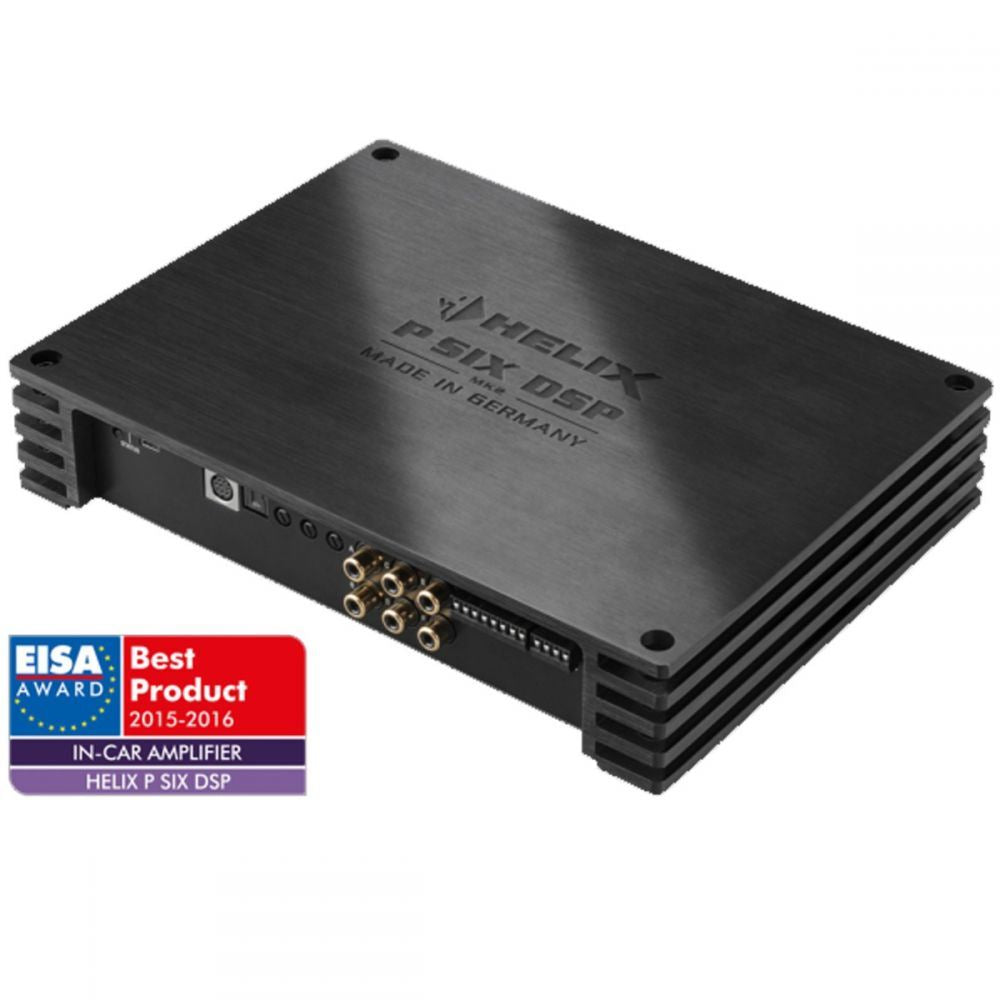
- Helix. German built, with the P SIX DSP MK2 offering high resolution amplification and an eight channel processor in one unit.
- AudioControl. Long established for signal processing and line drivers, and a strong choice for factory system integration.
- Phoenix Gold. Dependable full range Class D power at a competitive price, popular for straightforward four plus sub builds.
- Recoil. Feature rich value, including DSP and Bluetooth streaming options for simpler upgrades.
Compatibility and fitting
- High level inputs. Needed where the factory head unit has no RCA outputs. Look for auto turn on so no ignition feed is required.
- Amplifier wiring kit. 4 AWG is the sensible minimum for a six channel amp, with the main fuse within 30cm of the battery.
- Distribution block. Useful if a monoblock is joining the system later on.
- RCA and remote leads. Route signal cable away from power cable to avoid alternator whine.
- Mounting board. A ventilated MDF board keeps the heatsink clear and stops the chassis rattling against the boot floor.
Complete the job with our amp wiring kits and amplifier accessories.
Built in DSP and tuning
If your budget stretches to a six channel amplifier with onboard DSP, take it. Time alignment, parametric equalisation and independent crossovers per channel will transform a system far more than a modest jump in wattage. Several models here ship with PC or app based tuning software and preset memories, so you can store a tune and revert to it after any experiment.
Bridging the rear pair for a subwoofer
Bridging combines two channels into one higher power output, usually into a 4 ohm load. Set the bridged pair to low pass, typically between 60Hz and 90Hz, and set the front and rear channels to high pass at a similar point so the door speakers are not asked to reproduce deep bass. Getting these two settings right does more for perceived bass quality than turning the gain up ever will.
Why buy from Bass Junkies
Bass Junkies has been a UK car audio specialist since 1995, and every amplifier is supplied with full manufacturer warranty. Our Wolverhampton workshop fits and tunes multi channel systems every week, so if you want a straight answer on whether six channels covers your plan or whether a separate monoblock makes more sense, call the team on 01902 863 005.