
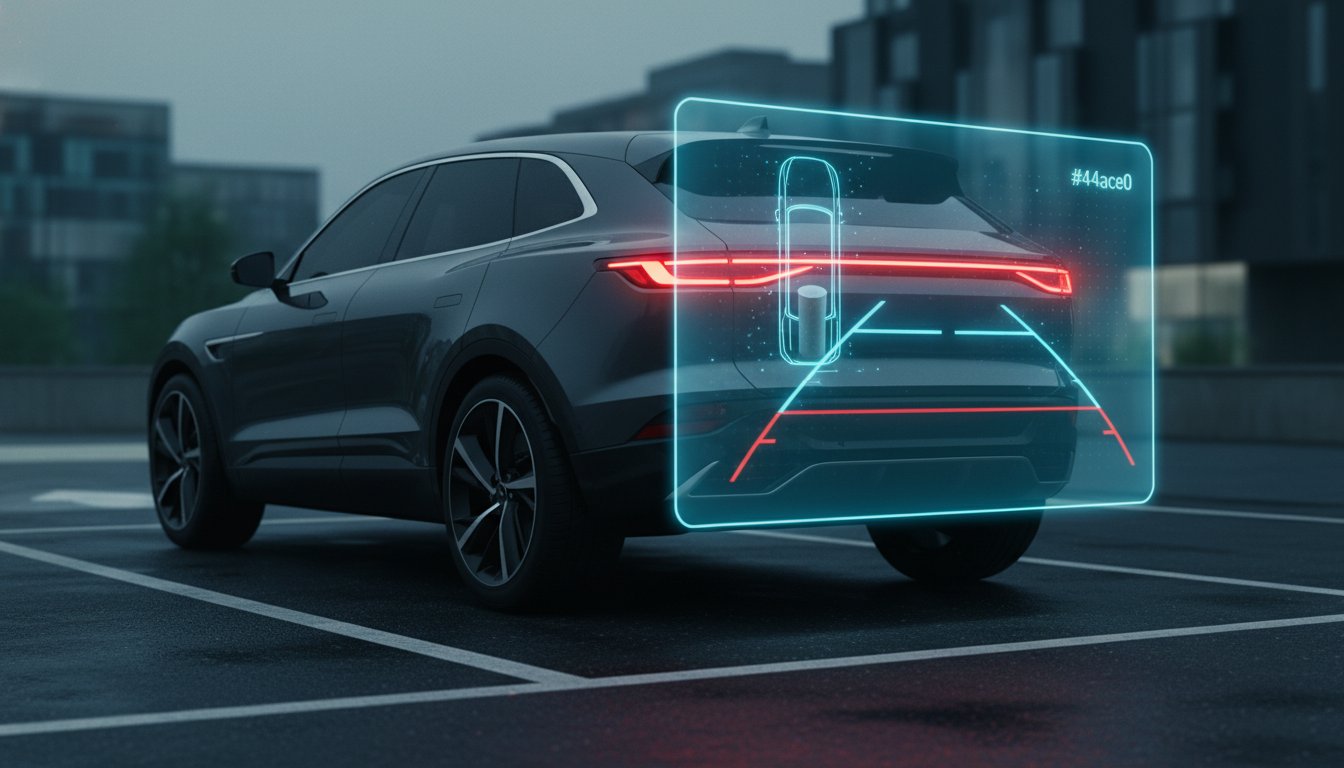
Your factory-fitted mirrors are lying to you about what is lurking behind your bumper. In the UK, 25% of all insurance claims involve reversing manoeuvres; often hitting low-level bollards or pedestrians that stay hidden in those massive blind spots. It is a gut-wrenching feeling when you hear that crunch against a high kerb because your reversing camera setup is non-existent or outdated. You want the confidence to nail every parking spot without the anxiety of a messy, wire-filled dashboard. At Bass Junkies, we know that massive performance starts with total control of your environment.
As the UK’s No. 1 car tech specialists, we agree that standard factory visibility just doesn't cut it in 2026. We promise to help you discover how to eliminate blind spots and master tight parking with this ultimate guide to choosing and installing the perfect kit. You will get the expert lowdown on crystal-clear HD sensors, the truth about wired versus wireless reliability, and how to achieve a seamless factory-look integration that boosts your vehicle's value. From MOSFET-powered head units to the latest 2-DIN fitments, we're stripping away the jargon to get you the vision you deserve.
Key Takeaways
- Eliminate lethal blind spots and conquer tight UK parking bays with crystal-clear vision that protects pedestrians and your paintwork.
- Learn why wired systems remain the gold standard for zero-latency signals in interference-heavy urban centres.
- Discover how to integrate a high-performance reversing camera into your dash or mirror for a stealthy, factory-standard finish.
- Master the technical "sweet spots," including the ideal field of view and why CCD sensors crush CMOS for night-time clarity.
- Ditch the "universal" guesswork with expert-tested fitting kits for VW, Ford, and BMW that deliver a perfect fit every time.
The End of Blind Spots: Why Every Vehicle Needs a Reversing Camera
UK parking bays are a genuine nightmare. Standard spaces haven't grown since 1994, but modern cars are 20% wider on average. You're constantly squeezing a massive SUV or a wide-body hatchback into a gap originally designed for a classic Mini. It's high-stakes geometry every time you hit the shops. A reversing camera isn't a luxury; it's your eyes where your mirrors fail. Modern car design prioritises aerodynamics and crash safety, which results in thick C-pillars and tiny rear windows. These design choices create massive dead zones that hide pedestrians, low walls, and those £150 alloy-killing kerbs. We see it every day at Bass Junkies. Drivers are tired of the guesswork and the expensive repair bills that follow a momentary lapse in vision.
Boosting your car's resale value is another massive win. In 2026, buyers expect modern safety tech as standard. An aftermarket kit that looks and performs like a factory fit makes your vehicle significantly more attractive on the used market. It shows you've looked after the car and invested in its protection. Whether you're navigating a tight driveway or a packed supermarket car park, having that crystal-clear rear view is the ultimate upgrade for any driver who values their paintwork and their peace of mind.
The Psychology of Better Parking
Multi-storey car parks in cities like Manchester or London are total stress factories. Tight ramps and concrete pillars are always waiting to bite your bumper. Adding visual cues and dynamic guide lines changes the game instantly. You stop guessing and start executing with precision. It's like having an expert friend spotting you from the pavement. That confidence boost is vital; you'll park faster and tighter without the cold sweat of a potential scratch.
Insurance and Liability Benefits
Low-speed bumps account for 25% of all UK insurance claims. Without proof, it's your word against theirs in a "he-said-she-said" scenario. High-resolution footage from a reversing camera setup acts as a secondary witness alongside your dash cam. While most UK insurers don't offer a direct discount yet, avoiding a single "at-fault" claim saves you an average of £350 in premium hikes over three years. Protect your No Claims Bonus with hard evidence.
Choosing Your Setup: Wired vs Wireless Reversing Cameras Explained
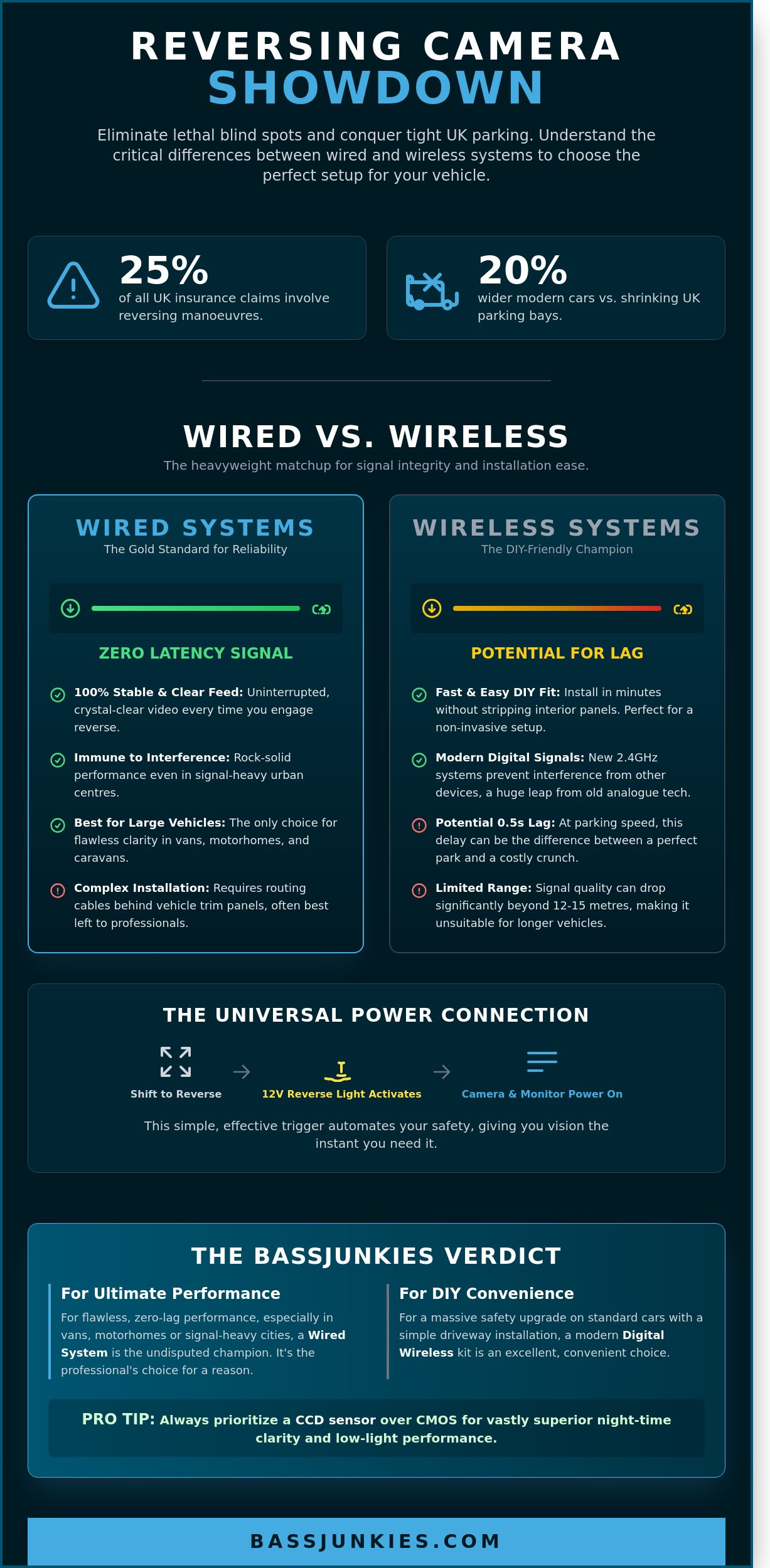
Deciding between wired and wireless is the biggest call you will make for your reversing camera setup. Wired systems remain the undisputed heavyweight champion for signal integrity. They deliver a 100% stable, zero-latency feed every single time you hit reverse. Wireless tech has closed the gap significantly, but the choice depends entirely on your vehicle type and your appetite for a bit of cable routing. We see too many drivers settle for "good enough" when they could have crystal-clear performance.
The Case for Wired Reliability
We always recommend wired kits for long-wheelbase vans, caravans, or motorhomes. Signal distance is the enemy of clarity. Cheap wireless units often suffer from a 0.5-second lag. At low parking speeds, that tiny delay means your screen shows a clear path when your bumper is already touching a bollard. A hardwired connection eliminates this technical blind spot. Professional routing keeps your 5-metre or 10-metre cables hidden behind trim panels for a factory-look finish. It won't fail in signal-heavy urban centres where interference is rife. It is about total confidence in your vision.
When Wireless Makes Sense
Wireless is the king of the DIY driveway install. If you want a non-invasive setup without stripping out your interior trim, a digital wireless system is your best bet. Modern 2.4GHz digital signals are a massive step up from old analogue tech. Analogue units from pre-2022 were notorious for "ghosting" where you would pick up grainy feeds from a neighbour's CCTV. New digital pairs lock the camera to the monitor securely. Solar-powered wireless options are now hitting the market, offering a cable-free experience that takes minutes to fit. Just remember that range limits usually cap out at 12 to 15 metres before the frame rate drops. If you are unsure which kit fits your dash, check out our range of vehicle-specific interfaces for expert advice.
Both systems typically tap into the 12V reverse light circuit for power. This triggers the monitor the instant you shift gears. It is a simple, effective way to automate your safety. Whether you choose the rock-solid wired route or the convenience of digital wireless, getting that extra set of eyes on the rear is a non-negotiable upgrade for 2026. High-performance parking is about precision, not guesswork.
Displaying the Action: Mirror Monitors, Dash Screens, and Head Unit Integration
Your dashboard is prime real estate. Don't clutter it with bulky, ugly monitors that look like an afterthought. Choosing the right display is about balancing visibility with your car's interior style. Whether you want a hidden screen or a massive 7-inch interface, the right setup ensures your reversing camera performs when you need it most. Bass Junkies stocks everything from stealthy mirror upgrades to heavy-duty standalone screens for commercial rigs.
- Mirror Monitors: The ultimate undercover solution for a factory-fresh look.
- Standalone Screens: Best for van drivers and towing enthusiasts who need a dedicated, constant feed.
- Head Unit Integration: The pro choice. Feed your video signal directly into a high-end Pioneer or Alpine deck.
The Stealth Mirror Approach
Mirror monitors are the smartest play for drivers who want to keep things clean. These units either clip over your existing glass or replace the mirror stalk entirely for a 100% OEM finish. The screen stays completely invisible while you drive. Shift into reverse, and a high-resolution LCD fires up behind the reflective surface instantly. It is clever technology that saves space.
When shopping for a mirror monitor, prioritise anti-glare coatings. These prevent trailing headlights from blinding you at night. Many of our top-spec models are dual-channel. This means they act as a front-facing dash cam while simultaneously providing your rear-view parking feed. It is a two-in-one safety massive win for any UK motorist.
Integrating with Aftermarket Stereos
This is the gold standard for car audio junkies. If you have a double-DIN head unit, you already own the best screen in the house. Most modern Pioneer, Alpine, and Kenwood units feature a dedicated "Camera In" port. This setup uses a 12V trigger wire connected to your reverse lights. The second you hit reverse, your music stays on but the screen flips to a crystal-clear 7-inch video feed.
The integration is seamless. You get a wider viewing angle and better colour reproduction than almost any standalone budget monitor. It makes parking a 5-metre SUV feel like child's play. Check out our Apple CarPlay head units for the perfect pairing. These units provide the ultimate interface for your reversing camera while bringing your smartphone apps to the dash. It is the cleanest, most professional way to upgrade your vision and your sound in one go.
Key Tech Specs: Wide Angles, Night Vision, and IP Ratings
Stop guessing where your bumper ends. A top-tier reversing camera is a precision tool for your vehicle. You need a Field of View (FOV) between 120 and 170 degrees to get the full picture. While 120 degrees covers the basics, a 170-degree wide-angle lens kills those lethal blind spots. It gives you a massive perspective of the kerb and approaching traffic.
The sensor is the heart of the system. You have two main choices:
- CMOS: Budget-friendly and power-efficient. Great for daylight but often struggles with digital noise in the shadows.
- CCD: The enthusiast's choice. These sensors offer 25% better clarity and superior low-light performance. They handle high-contrast situations without blowing out the highlights.
Seeing in the Dark
Cheap cameras fail the moment the sun goes down. They produce grainy, flickering footage that makes obstacles impossible to spot. High-sensitivity "starlight" sensors are the ultimate solution. These pull in every bit of ambient light from your factory reverse bulbs to create a vivid, usable image. If you frequently park in unlit areas, choose a reversing camera with Infrared (IR) LEDs. These project invisible light to illuminate objects up to 5 metres behind your boot.
Built to Brave the Rain
The UK weather is brutal. Road salt, grit, and relentless drizzle destroy inferior electronics. You need gear that's built to last. An IP67 rating is the bare minimum, but for cameras mounted low on the number plate, IP68 is essential. This rating confirms the unit is 100% dust-tight and can survive continuous immersion in water. It will withstand high-pressure jet washes and the worst British winters without fogging up.
Lens material matters just as much as the seal. Avoid plastic lenses. They scratch easily and turn yellow after 12 months of UV exposure. Premium units use 5-layer glass lenses. They stay crystal-clear, resist road grit, and provide the sharpest focus for years of heavy use.
Ready to fix your blind spots? Grab the ultimate reversing camera kits from the UK’s No. 1 specialist and park with total confidence.
Expert Fitting & High-Performance Kits: The Bassjunkies Advantage
Don't risk your pride and joy with "universal" guesswork that leaves you frustrated and out of pocket. At Bassjunkies, we only stock kits that survive our brutal "junkie" test. If a camera isn't crystal-clear or built to survive a wet British winter, it doesn't hit our shelves. We've spent 30 years as the UK's No. 1 specialist, providing tailored reversing camera solutions for VW, Ford, BMW, and Mercedes. These aren't generic parts. They are precision-engineered kits designed for your specific chassis. You get massive savings on ultimate brands like Kenwood, Alpine, and Pioneer, often beating high-street prices by 15% to 25% across our entire stock.
Our kits include everything you need for a factory-standard finish. You won't find yourself running to the hardware shop for extra clips or connectors. We provide the specific interfaces required to retain your steering wheel controls and original display functions. It's about seamless integration, not just sticking a screen on the dash. We've curated over 1,000 vehicle-specific products to ensure your upgrade looks like it rolled off the production line yesterday.
The Professional Install Difference
Modern vehicle electronics are incredibly complex. One loose connection can trigger a cascade of CAN bus errors or electrical gremlins that cost a fortune to fix at a dealership. Our professional installation service takes the stress out of the upgrade. Our experts handle the delicate trim removal and intricate wiring through factory channels. We use high-grade cable grommeting to stop water leaks into your boot, a common fail point for amateur DIY jobs. Most importantly, we calibrate your system. We ensure those digital guide lines perfectly match your car’s specific width, giving you millimetre-perfect accuracy every time you shift into reverse.
Ready to Upgrade?
It's time to ditch the blind spots and park with total confidence. Browse our massive range of high-performance vision systems online for fast nationwide delivery. You aren't just buying a box. You're getting expert advice from a team that lives and breathes car tech. We've helped over 500,000 UK drivers since 1995, and we're ready to help you too. Don't settle for second best when it comes to your safety. Shop the Reversing Camera Collection at Bassjunkies today and experience the ultimate in parking safety.
Dominate Every Manoeuvre: Your 2026 Vision Upgrade
Stop guessing. Start seeing. Blind spots cause thousands of preventable accidents on UK roads every year; it's time to kill the guesswork for good. Whether you're hunting for a high-definition wide-angle lens or a rugged IP68 rated unit that laughs at the British rain, the right reversing camera setup transforms your driving experience from stressful to seamless. You need crystal-clear visuals and total reliability every time you shift into R. Don't settle for factory-standard mediocrity when you can integrate a 170-degree view directly into your Pioneer, Alpine, or Kenwood head unit. We've been the UK's No. 1 car tech specialist since 1995, providing the expert technical support you need to get the job done right. Our warehouse is packed with massive stock levels ready for immediate dispatch to your door. It's the ultimate way to protect your vehicle and your peace of mind. Grab the gear that makes parking effortless and keep your pride and joy in pristine condition.
Upgrade Your Ride with a High-Performance Reversing Camera
Get behind the wheel with total confidence and show the road who's boss.
Frequently Asked Questions
Can I add a reversing camera to my existing factory screen?
You can definitely integrate a reversing camera with your factory display using a dedicated multimedia interface module. These kits bypass restrictive manufacturer software to deliver a crystal-clear feed on your existing 7-inch or 10-inch dashboard screen. We stock over 150 vehicle-specific interfaces for brands like BMW, Audi, and VW. It's a clean, OEM-style upgrade that keeps your cabin looking stock while massively boosting your parking game.
Are wireless reversing cameras as good as wired ones?
Wired cameras remain the gold standard for performance because they offer zero signal interference and a lag-free 30fps image. While 2026 wireless tech has improved, 2.4GHz digital signals can still suffer from 0.5-second delays or flickering in high-frequency urban areas. For a rock-solid connection that never drops out when you're backing into a tight spot, a hardwired setup is the only way to go. We always recommend copper over convenience for total reliability.
How much does it cost to have a reversing camera fitted in the UK?
Professional installation for a reversing camera in the UK typically costs between £150 and £350 for labour. Expect to pay a specialist around £60 to £90 per hour, with most installs taking 2 to 4 hours depending on your vehicle's trim complexity. If you're adding a camera to a complex German hatchback, the total bill including high-end hardware often hits the £500 mark. It's a smart investment to protect your paintwork from expensive £1,000 bumper repairs.
When looking for a reliable installer, it's worth getting quotes from nationwide specialists. For example, Safe & Sound Mobile is known for their expertise in vehicle security and audio systems, including camera installations across the UK.
Is a reversing camera legal for the MOT?
A broken reversing camera won't fail your MOT under current 2024 DVSA regulations because it's classed as a driver aid rather than a mandatory safety device. However, any aftermarket screen must not obstruct more than 40mm of the swept area of your windscreen. If your camera mounting has sharp edges or is insecure, an examiner might issue a minor defect or advisory notice. Safety is the priority, so keeping your gear in top shape is always the best move.
What is the best position to mount a reversing camera?
The best position is high and central, usually just above the rear number plate or integrated into the boot handle. This placement provides a 170-degree wide-angle view that covers both corners of your rear bumper. Mounting the lens at a height of 50cm to 90cm from the ground ensures you can see low-level obstacles like bollards or kerbs without distorting the perspective. It gives you the ultimate bird's-eye view for precision parking.
Do reversing cameras work in total darkness?
Most modern cameras work in near-total darkness by using high-sensitivity CMOS sensors or integrated Infrared (IR) LEDs. You should look for a camera with a 0.1 Lux rating to ensure visibility in pitch-black country lanes. High-performance models use 6 to 8 IR bulbs to illuminate the area up to 10 metres behind your car. This turns a midnight reverse into a bright, manageable manoeuvre, giving you total confidence regardless of the lighting conditions.
Can I use a reversing camera while driving forward (for towing)?
You can use your camera while driving forward if you wire the system to a constant 12V power source rather than the reverse light trigger. This is a massive win for anyone towing a horsebox or a 2.5-tonne caravan, as it lets you monitor your load at motorway speeds. Just ensure your monitor has a manual "always-on" mode so you can toggle the view whenever you need that extra peace of mind. It's like having a digital rearview mirror for your trailer.
What happens if the camera lens gets dirty or covered in rain?
Dirt and rain will blur your vision, so choosing a unit with an IP69K waterproof rating is essential for the British climate. High-end lenses feature hydrophobic coatings that repel water droplets, keeping your view sharp during a typical November downpour. If the lens gets caked in road salt or mud during winter, a quick wipe with a microfibre cloth restores that 1080p clarity instantly. Don't let a bit of grime compromise your safety.