

Your factory infotainment system is actively holding back your car's audio potential and your driving safety. Upgrading to a high-performance Apple carplay head unit is the fastest way to replace outdated factory software with a seamless, voice-controlled interface for Maps and Spotify. Most stock units in UK vehicles lack the internal MOSFET power and pre-out voltage required to drive aftermarket speakers effectively, making a hardware swap essential for any serious audio enthusiast.
You're likely tired of fumbling with suction-cup phone mounts and suffering through the flat, muddy sound produced by an aging dashboard. This guide shows you exactly how to select the right hardware and integrate it for maximum audio performance. We'll break down the latest 2-DIN fitments, essential wiring looms, and the specific technical steps needed to achieve a crystal-clear, thumping sound system in your vehicle.
Key Takeaways
- Learn how to transform your dashboard by integrating carplay for seamless, safe access to navigation, music, and Siri voice control.
- Compare the high-bitrate stability of wired connections against the cable-free convenience of 5GHz Wi-Fi wireless setups.
- Identify the correct aftermarket head unit for your vehicle by understanding the specific requirements for Single-DIN and Double-DIN apertures.
- Maximise audio performance by selecting hardware featuring MOSFET amplification and high-voltage pre-outs for superior signal clarity.
- Understand why professional fitting with vehicle-specific fascia kits is essential to prevent dashboard damage and ensure a factory-standard finish.
What is Apple CarPlay and How Does it Transform Your Drive?
Apple CarPlay is a software interface that mirrors your iPhone onto a car's head unit to provide safe, hands-free access to your digital life. It allows drivers to control navigation, music, and messaging through the vehicle's touchscreen or Siri voice commands. CarPlay is the industry-standard protocol for iOS vehicle integration. This technology eliminates the need to look at a handheld device by projecting a simplified version of iOS directly onto your dash. For UK drivers looking to overhaul their factory setup, adding high-performance car stereos is the fastest way to get this functionality. It's the ultimate bridge between your smartphone and your vehicle's hardware.
Understanding What is Apple CarPlay involves looking at how it replaces clunky, outdated factory software with a familiar, fluid interface. At Bass Junkies, we see hundreds of enthusiasts every month ditching their basic factory units for 2-DIN fitments that support this tech. It's about more than just a pretty screen; it's about bringing MOSFET power and crystal-clear digital processing to your mobile environment. Whether you're using a wired connection or the latest wireless dongle, the system ensures your focus stays on the road while your apps run in the background.
The Core Features: Maps, Music, and Messages
The primary power of carplay lies in its ability to run heavy-duty apps without lag. You get real-time navigation via Waze or Google Maps, which provides live traffic updates and speed camera alerts across the UK. This is a massive upgrade over static, built-in sat-navs that require expensive SD card updates. You can also enjoy seamless music streaming through Spotify or Apple Music, giving you full library access and thumping sound quality right on the dash.
- Live Navigation: Use Waze for real-time rerouting around M25 traffic jams.
- Endless Audio: Stream lossless audio through apps like Tidal or Spotify with full album art.
- Smart Messaging: Use Siri-powered messaging to dictate and listen to WhatsApp texts without touching a button.
Safety Benefits of Smartphone Integration
Safety is the biggest win when you upgrade to modern stereo screens with integrated CarPlay. It drastically reduces distracted driving by eliminating the need for flimsy phone mounts and tangled cables. The voice-first interface means Siri handles the heavy lifting, keeping your eyes on the road and your hands on the wheel. You don't have to fumble with a tiny phone screen when you're doing 70mph on the motorway.
The UI is specifically designed for quick glances at high speeds. Icons are large, high-contrast, and easy to hit even on bumpy roads. This simplified layout ensures that you get the information you need, like the next turn or the current track, in a split second. As the UK’s No. 1 specialist, we recommend this as the first safety upgrade for any vehicle. It transforms a dangerous distraction into a professional, integrated tool that makes every journey smoother and more secure.
Wired vs Wireless CarPlay: Choosing the Right Connection
Choosing between wired and wireless CarPlay depends on your priority for audio fidelity versus cabin convenience. Wired connections provide the most stable data transfer for high-bitrate audio and zero-latency response times. Wireless systems offer a cable-free cockpit by using a 5GHz Wi-Fi handshake for data and Bluetooth for initial pairing. While wireless setups are common in 2026, audiophiles often prefer the physical link to ensure consistent power delivery and maximum signal integrity. High-performance carplay systems require robust hardware to handle these data-heavy tasks without crashing.
Wired Connection: Stability and Charging
Wired CarPlay is the only choice for users demanding zero-latency audio playback. This is essential for high-fidelity car audio systems where even a millisecond of lag can ruin the experience. A physical Lightning or USB-C cable provides a massive advantage by charging your device simultaneously. You won't have to worry about a dead battery after a long road trip using GPS and streaming apps.
Reliability is another major factor for the wired approach. Physical connections are immune to radio interference that can sometimes plague wireless signals in dense urban areas. Many of the best aftermarket CarPlay head units prioritize these rear-mounted USB inputs for a permanent, hidden installation. This setup ensures your connection remains rock solid regardless of external environmental factors.
Wireless Convenience: Is It Worth the Premium?
Wireless CarPlay excels in convenience by connecting your iPhone to the head unit automatically the moment you start the engine. You can keep your phone in your pocket or bag, reducing cable clutter in the cockpit for a cleaner, professional aesthetic. It is the ultimate solution for short commutes where plugging in a cable feels like a chore. Most modern 2-DIN fitments now include this feature as standard on premium models.
The trade-off for this freedom is a higher initial hardware cost and increased battery consumption. Running Wi-Fi and Bluetooth simultaneously puts a heavy load on your iPhone, often requiring a wireless charging pad to keep up. If you want to upgrade your current setup, you can browse our latest stereo screens to find units that support both connection types. This flexibility allows you to use wireless for the daily run and wired for those long, thumping weekend drives.
Adding CarPlay to Older Vehicles: Aftermarket Head Units
Installing an aftermarket head unit is the most effective way to add carplay to an older vehicle. This hardware upgrade replaces your factory radio with a modern interface that supports seamless smartphone integration. Most cars built in the last 30 years can be upgraded using vehicle-specific fascia kits and wiring adapters. You must determine if your dashboard requires a Single-DIN or Double-DIN unit before choosing a model. High-performance brands like Pioneer, Alpine, and Sony offer the best reliability and processing power for 2026. This upgrade provides instant access to navigation, music, and hands-free calling on a high-resolution display.
Double-DIN vs Single-DIN Multimedia Systems
Double-DIN units are the standard for modern carplay installations in vehicles with a 100mm tall radio opening. These systems feature large 6-inch to 10-inch screens that sit flush within the dashboard for a factory-finished look. They provide the most screen real estate for maps and album art. If your vehicle has a narrow 50mm slot, you can still enjoy a premium experience with a Single-DIN "floating" screen. These innovative units mount the display on an adjustable arm that sits in front of the dashboard. Explore our range of CarPlay stereos to see which fitment suits your specific make and model.
Identifying your required fitment is a straightforward process. Measure the height of your current factory stereo; a 2-inch height indicates Single-DIN, while a 4-inch height is Double-DIN. Many UK vehicles require a bespoke fascia panel to bridge the gap between the new universal stereo and the original dashboard curves. Our expert team at Bass Junkies provides the technical advice needed to ensure your new screen looks like it came from the factory. We stock massive levels of fitting accessories to get your system running without delay.
Top Brands and Hardware Specs to Look For
Pioneer and Alpine remain the gold standard for audio tuning and interface speed in the UK market. These brands prioritize high-end internal components like MOSFET power for thumping audio quality and crystal-clear output. Their 2026 lineups feature lightning-fast processors that eliminate lag when switching between navigation and music. Sony's XAV-AX series is another powerhouse option, famous for its rapid boot-up times and clean, minimalist designs. These units are perfect for drivers who want their system ready to go the moment the ignition turns.
Screen technology is the most critical spec to check before you buy. Always choose a capacitive touchscreen over a resistive screen for a superior user experience. Capacitive screens use the same glass technology as modern smartphones, allowing for multi-touch gestures and better sunlight visibility. According to CNET's in-depth CarPlay review, hardware responsiveness is vital for maintaining focus on the road. High-quality screens ensure that every tap and swipe is registered instantly, providing the ultimate in-car tech upgrade for any enthusiast.
Maximising Audio Quality and Vehicle Integration
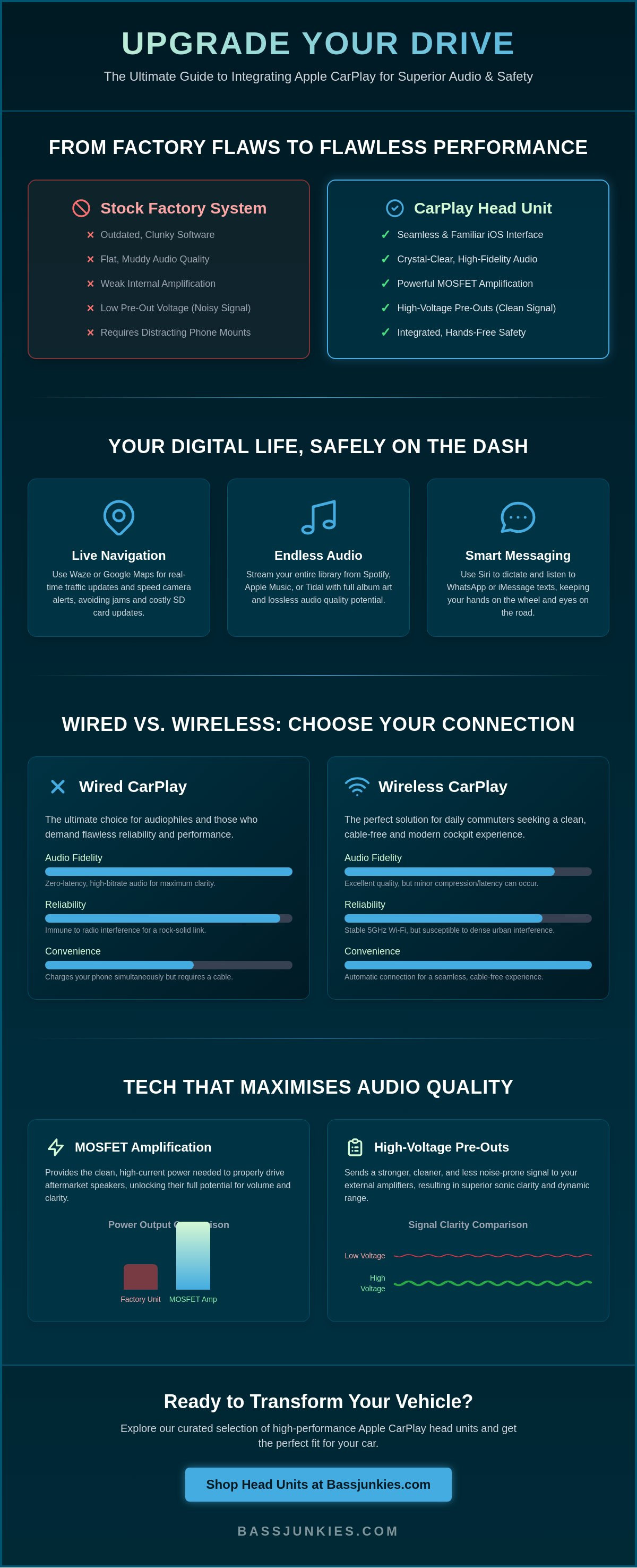
Upgrading to a modern head unit delivers an instant increase in audio performance by replacing low-quality factory chips with high-efficiency MOSFET amplification. These units provide stable power delivery and higher signal-to-noise ratios, resulting in crystal-clear sound even at high volumes. Integration is seamless through vehicle-specific interface kits that retain factory steering wheel controls and reversing cameras. High-voltage pre-outs, usually 4V or higher, ensure a clean signal for external amplifiers, making the head unit the central hub for any high-performance audio system.
Factory stereos often use cheap, underpowered internal amps that distort at 50% volume. A dedicated aftermarket unit typically features 50W x 4 MOSFET power. This creates a punchier, more dynamic response from your existing speakers. For those wanting the ultimate setup, look for units with 13-band graphic EQs and time alignment features. These tools allow you to adjust the soundstage so every beat hits your ears at the exact same moment.
Retaining Steering Wheel Controls with Connects2
You don't have to sacrifice convenience for power. A Connects2 interface kit acts as the bridge between your new carplay stereo and the car's CAN-bus system. This ensures your volume, track skip, and voice trigger buttons work exactly like they did from the factory. Most UK vehicles require these plug-and-play wiring looms to avoid messy custom splicing. It's a straight-forward install that keeps your eyes on the road and your hands on the wheel.
The Role of Pre-Outs in a High-Power System
Your head unit serves as the brain for massive car subwoofers and multi-channel setups. High-voltage pre-outs, specifically 4V or 5V variants, are essential for professional-grade builds. Higher voltage means your high-performance car amplifiers don't have to work as hard to boost the signal. This drastically reduces background hiss and floor noise. Premium units also offer independent subwoofer control, allowing you to fine-tune the thumping bass levels directly from the touchscreen.
Key Takeaways:
- MOSFET amplification provides 50W x 4 of cleaner, more stable power than factory units.
- Connects2 kits allow for 100% retention of steering wheel buttons and factory cameras.
- 4V or 5V pre-outs are necessary for high-fidelity signal transfer to external amps.
- 13-band EQs and time alignment offer professional-level control over the car's acoustic environment.
Upgrade your signal path today with our range of high-spec carplay head units.
Professional Installation vs DIY: Getting the Perfect Fit
Installing a carplay system in 2026 requires a choice between a DIY project and a professional fitment to ensure full vehicle integration. Professional installation is the most reliable path for modern cars because it prevents dashboard damage, electrical shorts, and lost steering wheel functionality. While DIY saves on initial costs, it requires specialized trim removal tools and vehicle-specific fascia kits that are often difficult to source. A professional technician ensures that high-speed data connections and DAB+ antennas are positioned for maximum performance, providing a factory-standard finish that DIY attempts rarely match.
Professional fitting is the gold standard for high-performance audio. A botched DIY job often leads to expensive dashboard damage or parasitic battery drain from incorrect wiring. Specialists use dedicated wiring harnesses to bridge the gap between your vehicle's factory loom and the new head unit, ensuring every connection is secure and properly fused. If you want a seamless, high-octane setup without the technical headache, check out our Professional Car Audio Installation Guide for a deeper look at the specialist process.
Essential Fitting Kits and Accessories
Getting the right look is just as important as the sound quality. Fascia panels match the texture and colour of your original dash, ensuring your new 2-DIN screen doesn't look like a cheap afterthought. You'll also need antenna adapters to maintain DAB+ and FM radio functionality, as factory plugs rarely match aftermarket units. Proper external microphone placement is critical for crystal-clear Siri commands and call quality. We recommend positioning the mic near the rearview mirror or the A-pillar to minimize wind noise and cabin interference.
Don't forget the GPS aerial. Even if your phone provides the data, a dedicated GPS antenna tucked under the dash improves signal accuracy in remote UK areas. Using high-quality audio accessories ensures that your system stays powered and connected under the most demanding driving conditions. These small components prevent the signal drops and interference that ruin a premium tech upgrade.
Why Sound Deadening is the Final Step
High-end audio is wasted if you're fighting tyre roar and engine hum at 70mph. Sound deadening materials transform your cabin into a studio-grade listening environment by reducing ambient road noise. Dynamat serves as the essential foundation for any head unit upgrade, killing vibrations at the source and allowing your speakers to punch through the silence. For a complete walkthrough on silencing your ride and maximizing your system's potential, read our Sound Deadening Guide.
Reducing the noise floor means you don't have to crank the volume to hear the clarity of your new carplay system. It protects your ears and your equipment. Investing in sound deadening is the difference between a loud system and a truly high-fidelity experience.
Take Control of Your Drive With a Pro-Grade CarPlay Setup
Upgrading to 2026 standards means replacing restrictive factory software with a high-performance carplay interface. Wireless connectivity offers total convenience for daily commutes; meanwhile, wired connections deliver the ultimate stability for long-distance hauls. Integrating a 2-DIN head unit from Pioneer, Alpine, or Kenwood is the most effective way to modernize older dashboards while boosting audio output via high-volt pre-outs.
Successful installation requires matching the right fascia kits and wiring looms to maintain your vehicle's original features. Our team provides the technical authority and professional installation support needed to get the job done right the first time. We hold a massive UK stock of premium hardware ready for immediate dispatch to your door.
Upgrade your ride with the UK's No.1 CarPlay specialist – shop the latest stereo screens here!
Grab your gear from the UK's leading car audio junkies and experience crystal-clear sound on every journey.
Frequently Asked Questions
Can I add Apple CarPlay to any car?
You can add CarPlay to almost any vehicle by installing an aftermarket head unit. If your car has a standard 1-DIN or 2-DIN dashboard slot, you can swap the factory radio for a high-performance unit from brands like Pioneer or Alpine. Even for cars with integrated dashboards, bespoke fascia kits allow for a seamless fit. This upgrade brings modern tech to older models, making it the top choice for UK drivers looking to modernise their ride.
Do I need to pay a subscription for Apple CarPlay?
Apple does not charge a subscription fee for using CarPlay. It's a free feature built into your iPhone that mirrors your apps to the car's display. You only need a compatible head unit and a lightning or USB-C cable to get started. However, individual apps like Spotify or Audible still require their own monthly memberships to access premium content. You won't see a bill from Apple or your car manufacturer just to use the interface.
Why is my CarPlay not connecting wirelessly?
Wireless connection issues usually stem from a handshake failure between the iPhone’s Bluetooth and the head unit’s Wi-Fi. CarPlay requires both to be active because Bluetooth handles the initial pairing while Wi-Fi transfers the heavy data. Check that "Allow CarPlay While Locked" is enabled in your iPhone settings. If it still fails, reset the network settings or update your iOS to the latest firmware to fix known software bugs.
Can I watch YouTube or Netflix on Apple CarPlay?
Standard Apple CarPlay does not support video streaming apps like YouTube or Netflix due to strict safety regulations. Apple restricts the interface to navigation, messaging, and audio apps to prevent driver distraction. If you want video playback, you need a head unit with an HDMI input or a dedicated multimedia interface while parked. Always remember that watching video while driving is illegal under UK law and carries heavy penalties.
Does Apple CarPlay work with a locked iPhone?
Yes, CarPlay works perfectly while your iPhone is locked once the initial permission is granted. You must enable the "Allow CarPlay While Locked" toggle in the Settings menu under General and CarPlay. This ensures your phone stays secure in your pocket or glovebox while the car display handles your maps and music. It’s a standard security feature designed to keep your data safe while you are on the move.
What is the difference between Apple CarPlay and Android Auto?
The main difference is the operating system compatibility; carplay is for iPhones and Android Auto is for Google-powered devices. CarPlay uses a simplified, icon-based interface that mirrors the iOS experience, while Android Auto relies heavily on the Google Assistant and a card-based notification system. Most modern 2-DIN head units sold in the UK are dual-compatible, allowing you to switch between the two depending on which phone you plug in.
Do I need a special cable for wired CarPlay?
You need a high-quality, MFi-certified Lightning or USB-C cable to ensure a stable carplay connection. Cheap, uncertified cables often cause the system to drop out or fail to launch entirely because they lack the necessary data transfer chips. For the best results, use the original cable that came with your iPhone. A 1-metre cable is usually the perfect length to reach from your dashboard USB port to your phone mount without clutter.
Will CarPlay drain my car battery?
CarPlay will not drain your car battery while the engine is running because the alternator provides constant power. If you use a wired connection, the head unit actually charges your iPhone while you drive. Problems only occur if you leave the ignition in the accessory position for several hours with a high-power sound system running. Modern head units feature low-voltage shut-off circuits to protect your vehicle's starting power and ensure you aren't stranded.