

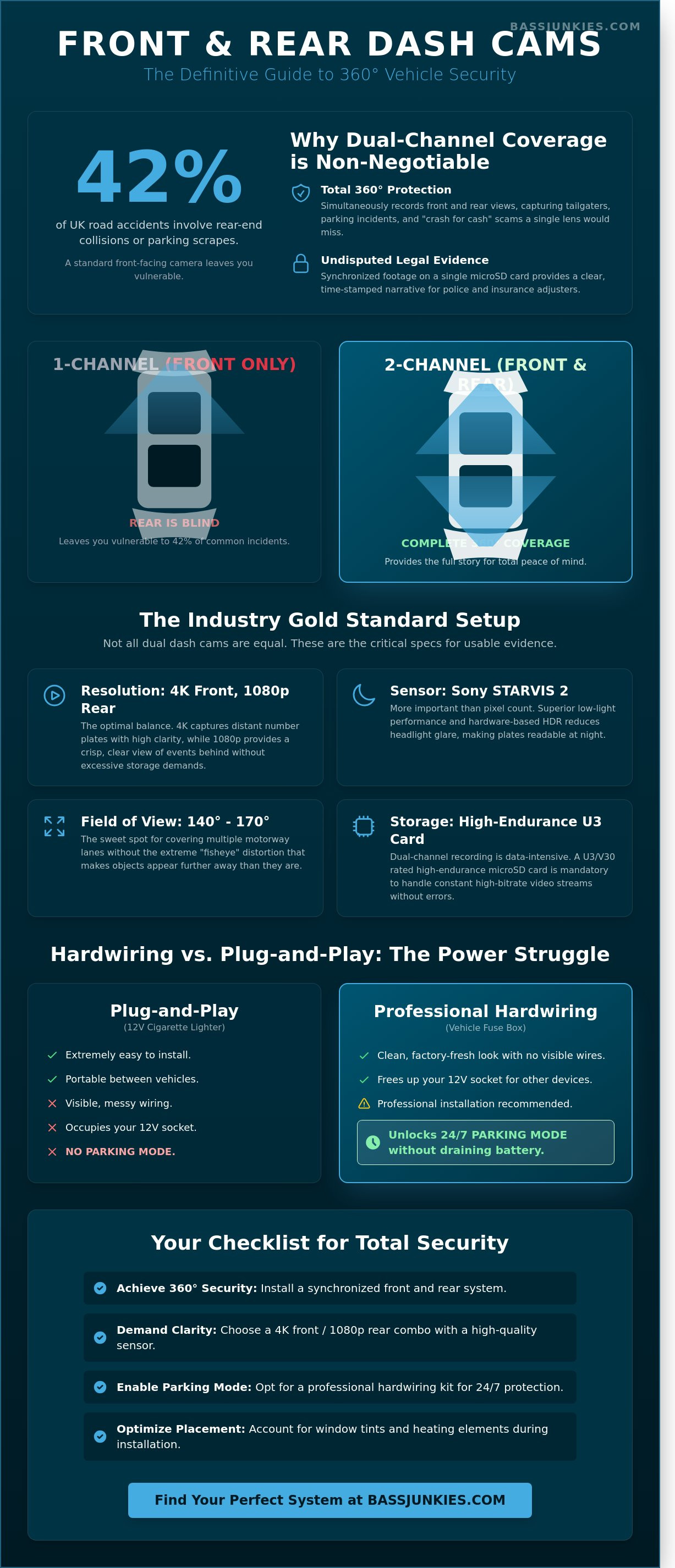
What if your front-facing camera misses the exact moment a scammer slams into your rear bumper at a UK roundabout? A dash cam front and rear system provides total 360-degree protection by capturing high-definition footage from both ends of your vehicle simultaneously. This dual-channel setup is the definitive way to secure legal evidence for the 42% of UK road accidents that involve rear-end collisions or parking bay scrapes.
You know that relying on a single lens leaves half your car vulnerable to insurance fraud and aggressive tailgaters. This guide promises to clear the confusion around resolution drops and complex wiring so you can choose a system that delivers maximum performance. We're diving into the latest 2026 tech, from crystal-clear 4K dual-recording to seamless hardwiring kits that keep your cabin looking factory-fresh.
Key Takeaways
- Achieve total 360-degree vehicle security by installing a dash cam front and rear system that synchronizes dual-channel footage onto a single microSD card.
- Identify why the 4K front and 1080p rear resolution combo is the industry gold standard for capturing high-bitrate evidence and clear number plates.
- Understand the critical role of professional hardwiring kits in enabling 24/7 Parking Mode without draining your vehicle's battery.
- Learn how to optimize rear camera placement to overcome common installation challenges like privacy glass tinting and rear window heating elements.
- Explore how to integrate your dual-channel system with advanced head units for instant playback and management via Apple CarPlay or Android Auto.
What is a Front and Rear Dash Cam System?
A dash cam front and rear system, commonly known as a dual-channel or 2-CH setup, is a high-performance recording solution that captures the road ahead and the view behind your vehicle simultaneously. These systems are fully synchronized; they save all footage to a single microSD card with matching timestamps for instant cross-referencing. The front unit serves as the primary brain of the operation, housing the main processor and power hardware, while the rear unit is a compact slave camera connected via a dedicated cable. This configuration provides the ultimate evidence package for rear-end collisions, aggressive tailgating, and "crash for cash" scams that a single camera would miss. For a broader look at the technology, Wikipedia's page on dashcams provides an excellent overview of how these devices became essential vehicle kit.
At Bassjunkies, we see these systems as the gold standard for security and safety on UK roads. By using a unified processor, the system ensures that both video feeds are perfectly aligned. If an incident occurs, you don't have to hunt through two different devices to find the truth. You get a crystal-clear, high-definition narrative of exactly what happened around your entire vehicle.
1-Channel vs. 2-Channel: The Key Differences
A standard 1-channel camera only looks forward, which means you are effectively blind to 40% of all road incidents. Rear-end impacts are the most common type of collision in the UK, and without a secondary lens, you lose the ability to prove a tailgater's speed or distance. A 2-channel system fills this gap, providing insurance adjusters with a complete 360-degree perspective of the event.
Recording two high-definition streams at once does demand more from your hardware. You'll need a high-endurance, U3-rated microSD card to handle the massive data write speeds required for dual 1080p or 4K feeds. While a single camera uses less storage, the trade-off is a massive lack of protection when it matters most.
Why Rear Coverage is Non-Negotiable in 2026
Staged accidents are on the rise across national motorways, with fraudsters often targeting drivers from behind to force a "fault" claim. In 2026, having rear coverage is the only way to debunk these "crash for cash" schemes by showing the driver's erratic behaviour before the impact. Dual-channel systems are also vital for identifying hit-and-run offenders in car parks who clip your bumper while you're away from the car.
Investing in a front and rear setup ensures you aren't left with an expensive repair bill and a lost no-claims bonus. It's about total vehicle awareness and professional-grade protection. For a deeper dive into the latest tech specs, check out our Dash Cam Buying Guide 2026 to see which system fits your driving style.
Technical Specs: Resolution, Bitrate, and Sensors
A professional dash cam front and rear system relies on 4K resolution at the front and 1080p at the rear to provide usable evidence. This setup captures critical details like number plates at a distance while maintaining a clear view of what is happening behind the vehicle. High resolution must be backed by a high bitrate to prevent motion blur during high-speed incidents. Premium hardware uses Sony Starvis sensors and a 140 to 170 degree field of view to ensure maximum coverage without excessive distortion.
Resolution is only half the story. Bitrate refers to the amount of data processed per second; if this is too low, your 4K footage will look like a pixelated mess when you pause it to read a plate. According to Forbes Wheels' Best Dash Cams, the technical configuration of the hardware is what separates budget toys from professional tools. You need a bitrate of at least 30 Mbps for the front channel to keep the image sharp. A 140 degree lens is the sweet spot for UK roads. It covers three lanes of motorway traffic without the extreme fisheye effect that makes vehicles appear further away than they actually are.
Understanding Sensor Technology
The sensor is the heart of the camera. Sony Starvis 2 sensors are the industry gold standard because they handle extreme light contrast. When a car follows you at night, their headlights usually blow out the image, making the plate unreadable. Starvis 2 tech suppresses that glare while pulling detail out of the shadows. Hardware-based HDR (High Dynamic Range) is essential here. It takes multiple exposures simultaneously to balance the light. Software-processed night vision often just adds digital noise, which ruins clarity. A high-quality sensor is more important for identifying plates than raw pixel count alone.
Storage and SD Card Requirements
Running two cameras at once puts massive strain on your storage media. Dual-channel systems require U3 or V30 rated high-endurance microSD cards to handle the constant data stream. Standard cards will fail within months due to the high cycle of rewrites. Loop recording manages this by overwriting the oldest files first, but it has to manage two simultaneous video streams. For long-distance driving across the UK, we recommend a minimum capacity of 128GB or 256GB. This ensures you have several hours of footage before the loop resets. If you are looking to upgrade your vehicle protection, you can view security and safety products to find the right high-performance fit for your car.
Hardwiring vs. Plug-and-Play: The Power Struggle
Hardwiring is the only professional standard for a high-performance dash cam front and rear setup. While plug-and-play cigarette lighter adapters offer a quick fix, they are strictly for amateurs who don't mind messy cables and limited functionality. A hardwire kit connects your cameras directly to the vehicle fuse box, providing a clean installation and unlocking 24/7 surveillance capabilities. This constant power source is what separates a basic recording device from a complete security solution.
The primary advantage of hardwiring is the ability to run Parking Mode without draining your car battery. Professional kits feature integrated voltage cut-off technology that monitors your battery levels in real-time. If the voltage drops below a specific limit, typically 11.8V or 12V, the system automatically shuts down the cameras. This protection ensures your vehicle always has enough cranking power to start while maintaining maximum security during your absence.
Installing a dual-channel system involves more than just sticking cameras to glass. You must route long cables through headliners and behind pillar trims to connect the front and rear units. This process requires technical precision to ensure wires don't obstruct side-curtain airbags or rattle against the interior panels. It's a detailed task that results in a seamless, integrated look that doesn't compromise the cabin aesthetics.
The Benefits of Professional Hardwiring
Hardwiring hides all unsightly wires behind the dash and trim for a factory-fitted appearance. This professional approach is vital for enabling the G-Sensor trigger, which acts as a digital sentry. When the sensor detects a bump or impact in a car park, it instantly wakes the camera to record the event. Secure your vehicle by choosing the right components from our security and safety collection today.
Managing Power in Modern Vehicles
Modern vehicles equipped with Stop-Start technology present unique challenges for dash cam power management. Frequent engine cycles can cause voltage dips that reset lower-quality cameras. High-end 4K dash cam front and rear systems are power-hungry and often benefit from dedicated external battery packs. These packs charge during transit and power the cameras while parked to avoid any strain on the lead-acid battery. Using quality accessories is essential to prevent electrical interference with your DAB+ radio or GPS signals.
Installation Challenges: Rear Windows and Tinting
Installing a dash cam front and rear system requires precision to overcome rear window heating elements and dark factory tints. You must position the rear lens specifically between the demister lines to avoid visual obstructions and prevent adhesive damage to the copper tracks. High-quality sensors and smart cable management are the only ways to ensure your rear-facing footage is as sharp as the front. Choosing between an internal or external camera depends entirely on your vehicle's body style and the presence of obstructions like spare wheels or spoilers.
Rear window heating elements can cause autofocus issues or create "halos" around lights at night. To fix this, mount the camera lens directly between two heater wires. If your car has a vertical rear window, like many 4x4s or vans, an internal camera might struggle with glare. In these cases, an external, IP67-rated waterproof camera mounted near the registration plate provides a cleaner field of view. This setup bypasses the glass entirely, removing the risk of reflections or tint interference.
Dealing with Tinted Windows
Factory privacy glass often blocks up to 80% of visible light, which can turn your rear footage into a dark, grainy mess. You must adjust the exposure settings on the rear channel of your dash cam to +1.0 or +2.0 to compensate for the dark film. This digital boost helps pull detail out of the shadows without blowing out the highlights in the foreground.
Sony Starvis sensors are essential for any vehicle with heavy tinting. These sensors are designed for low-light performance and can "see" through dark glass far better than standard CMOS alternatives. To get the best results, mount the camera as close to the glass as possible. This reduces reflections from the rear parcel shelf, which often creates a "ghosting" effect on the recording during sunny days.
Cable Routing for a Clean Finish
Hatchbacks and saloons require different installation strategies. For a hatchback, you must route the cable through the flexible rubber grommets located at the top of the tailgate. This keeps the wiring hidden and protects it from the weather. Saloons are simpler, allowing you to tuck the cable into the headlining along the side of the cabin. Always route cables behind the side-curtain airbags. Crossing an airbag with a cable can prevent it from deploying correctly in an accident, which is a major safety risk.
For more technical advice on where to place your hardware, read the Dashboard Camera Dash Cam guide. Bass Junkies experts recommend using plastic trim tools to avoid scratching your interior panels during the run. If you find the cable is too short for a large SUV, look for specific extension leads designed for your camera model rather than splicing the wires yourself.
Don't settle for a basic setup when you can have the ultimate protection. Explore our full range of high-performance dash cams today.
Integrating Security with Your Car Audio System
A dash cam front and rear system delivers total situational awareness by capturing 360 degrees of road data. This dual-lens setup is the most effective way to combat UK crash-for-cash scams and provide undeniable evidence for insurance providers. Integrating these cameras with advanced head units allows for instant on-screen playback without needing a laptop. It's a high-performance security solution that turns your dashboard into a digital witness. This configuration ensures that every tailgater or blind-spot incident is recorded in high definition. It's the ultimate upgrade for any driver looking to protect their vehicle and their no-claims bonus.
Modern dash cams now sync directly with stereo screens to give you a massive view of your footage. Using Apple CarPlay or Android Auto interfaces, you can manage camera settings and review clips directly from the dash. This eliminates the frustration of using small, built-in camera displays or fumbling with SD cards. It's about creating a seamless, tech-heavy cockpit that prioritizes both sound and safety. Brands like Pioneer and Kenwood have pioneered this integration, making security a core part of the infotainment experience.
A professional install is vital to ensure your dash cam front and rear system doesn't interfere with your car's electronics. Poorly shielded cables in DIY setups often cause a 20% drop in DAB+ radio reception or disrupt sensitive GPS signals. Expert technicians route high-quality wiring away from the vehicle's existing looms to maintain crystal-clear audio and navigation accuracy. This technical precision prevents the "electronic noise" that plagues cheaper, uncertified installations. You get a clean look with zero wires on show and a system that works perfectly every time you start the engine.
Smart Integration and App Control
High-end dash cams utilize 5GHz WiFi to transfer footage to your smartphone up to four times faster than standard 2.4GHz connections. This speed is essential when you need to show a police officer footage at the roadside immediately. Specific Kenwood and Pioneer units offer direct touchscreen control, allowing you to trigger manual recordings or format the memory card without touching the camera itself. Cloud-based systems take this further by providing real-time vehicle tracking and instant impact alerts. If someone hits your parked car, you get a notification on your phone before they've even left the scene.
Professional Fitting vs. DIY
High-performance hardware deserves a high-performance installation to avoid the dreaded "DIY rattles" that occur when trim panels aren't secured correctly. Professional installers often use sound deadening materials during the process to eliminate vibrations and improve the overall acoustics of your cabin. This attention to detail ensures your interior stays silent while your security system stays loud and clear. Don't risk damaging your interior plastics or compromising your airbag deployment with amateur wiring. Visit Bassjunkies for expert advice and the best dash cam deals to secure your ride today.
Secure Your Vehicle with 2026 Dual-Channel Technology
Equipping your car with a dash cam front and rear system is the only way to guarantee total visual accountability on UK roads. Dual-channel setups eliminate the blind spots that leave you vulnerable during insurance claims, especially in rear-end shunt scenarios. High-bitrate recording and premium sensors from industry leaders like Nextbase ensure every plate is legible, even in low-light conditions. Hardwiring these units remains the gold standard for enthusiasts who demand 24/7 parking surveillance without draining the vehicle battery.
Bass Junkies has been the UK’s No. 1 car tech specialist since 1995, delivering expert technical advice and huge savings on brands like Kenwood. Whether you're navigating tight city streets or motorway hauls, our team ensures you get the right kit for your specific vehicle. Don't leave your car's safety to chance when professional-grade protection is a simple upgrade away.
Upgrade to 360-degree protection with our range of Front and Rear Dash Cams
Get your setup sorted now and experience the peace of mind that comes with pro-level security.
Frequently Asked Questions
Does a rear dash cam record through tinted windows?
Yes, high-quality rear cameras equipped with Sony Starvis sensors capture clear footage through standard factory-tinted glass. You might need to boost the exposure or brightness settings in the camera app to pull detail from darker shadows. Be aware that 5% limo tint significantly blocks light and degrades night-time performance. For the best results, mount the lens directly against the glass to minimize internal reflections.
Is it hard to install a front and rear dash cam?
Installing a dash cam front and rear setup is a straightforward DIY task for most enthusiasts but requires more cable management than a single-channel unit. You must route a video cable from the front windscreen to the rear window by tucking it behind the headliner and pillar trims. Hatchback owners need to feed the wire through the rubber weatherproofing grommets to keep the install clean and protected from moisture.
Will a front and rear dash cam drain my car battery?
A dual dash cam won't drain your battery if it is powered via the 12V cigarette lighter because it shuts off with the ignition. If you use Parking Mode, the camera draws a small current while the car is parked. You must use a hardwire kit with an integrated voltage cut-off set to 12.4V or 12V. This ensures the camera shuts down before the battery level drops too low to start your engine.
Do front and rear dash cams record on the same SD card?
Yes, professional dual-channel systems save both front and rear video streams onto a single microSD card. The system typically labels files with "_F" and "_R" suffixes so you can quickly identify the correct footage. Because you are writing double the data, always use a high-endurance U3 rated card. We recommend a minimum of 64GB or 128GB to handle the constant read-write cycles without hardware failure.
Can I use a rear dash cam as a reversing camera?
No, a rear dash cam is not a substitute for a dedicated reversing camera because the mounting position and focal length are completely different. Dash cams are mounted high to capture the road, while reversing cameras sit low near the bumper to spot small obstacles or kerbs. If you want better visibility while parking, check out our reversing camera guide for a proper high-performance upgrade.
Do I need two separate dash cams or a dual kit?
You should always buy a dedicated dual-channel kit rather than two separate cameras. A kit ensures both units are perfectly synchronized and record to one central SD card for easier evidence retrieval during insurance claims. Buying two separate cameras is more expensive and clutters your dashboard with unnecessary power cables. A single 2-channel system is the ultimate solution for seamless, high-performance vehicle coverage.