
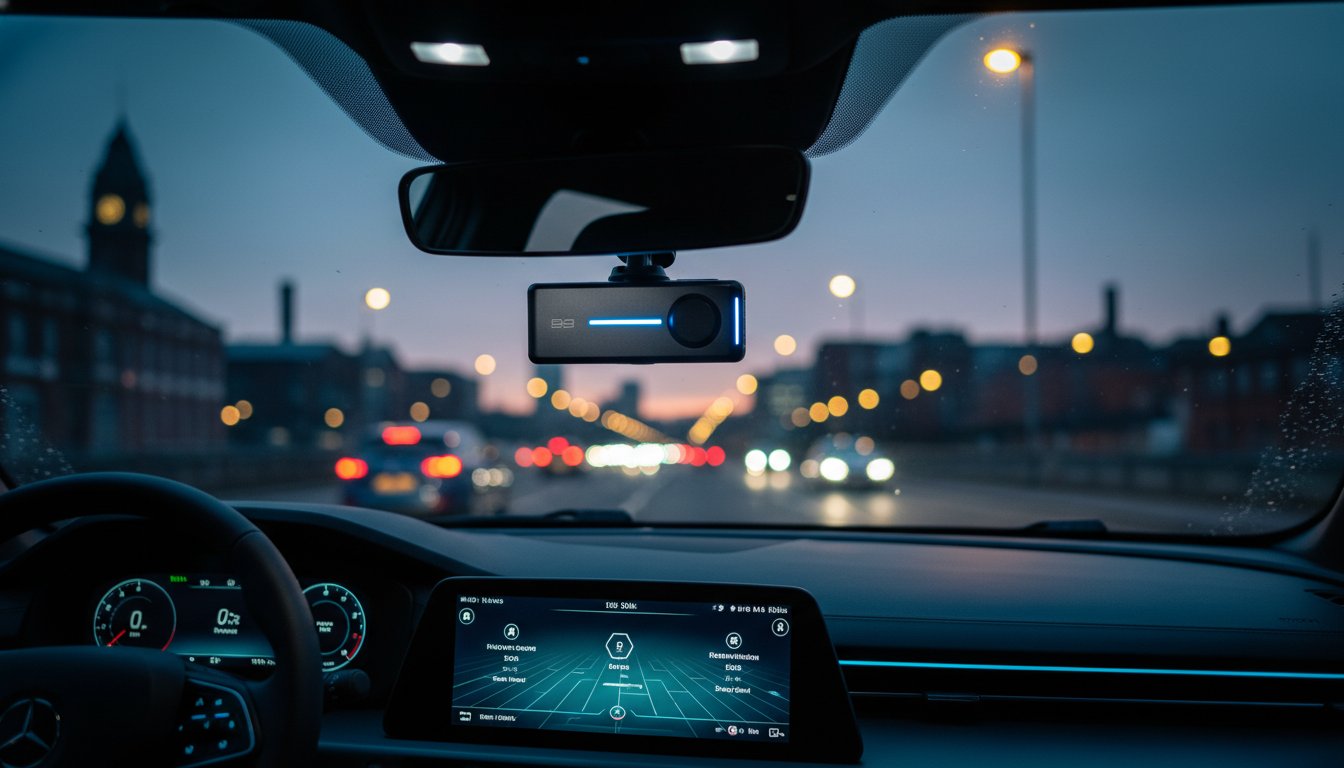
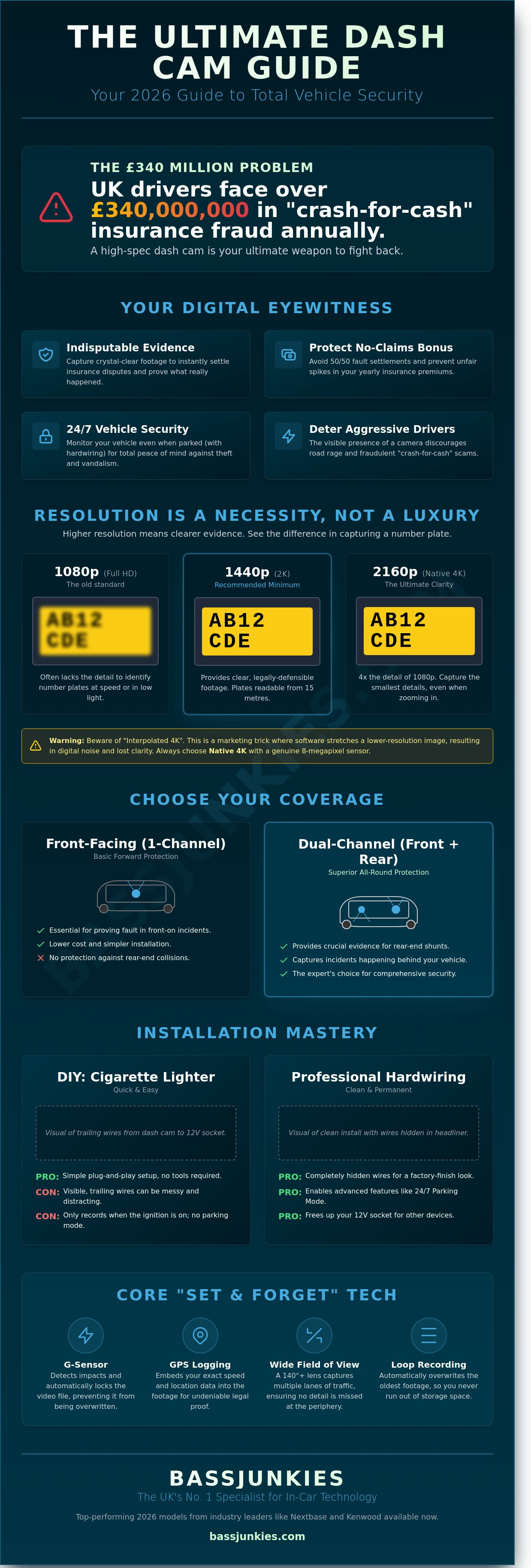
UK drivers face over £340 million in "crash-for-cash" insurance fraud annually, but a high-spec dash cam is the ultimate weapon to fight back. These digital video recorders mount to your windscreen to capture indisputable, crystal-clear evidence that settles insurance disputes instantly. You get total vehicle security and a protected no-claims bonus without the headache of messy wires or complex technical jargon. It's the most effective way to secure your motor with professional-grade tech that never misses a second of the action.
We know you want maximum performance without the confusion of bitrates and G-sensor settings. This 2026 guide cuts through the fluff to guarantee you find a system that offers a discreet fit and massive peace of mind. We'll show you exactly which sensors deliver the best low-light footage and how to choose a setup that makes insurance claims effortless. It's time to get the expert's view on the best in-car tech from the UK's No. 1 specialist.
Key Takeaways
- Understand why a high-definition dash cam is the ultimate security upgrade for capturing indisputable evidence of road incidents and accidents.
- Learn to distinguish between native 4K and interpolated resolutions to ensure you can read number plates clearly at a distance.
- Discover why dual-channel systems provide superior protection against rear-end collisions compared to standard front-facing setups.
- Compare DIY cigarette lighter power options against professional hardwiring for a clean, permanent finish without trailing wires.
- Identify the top-performing 2026 models from industry leaders like Nextbase and Kenwood to perfectly match your vehicle’s existing tech.
What is a dash cam and why is it a vital car upgrade?
A dash cam is a dedicated vehicle security recorder designed to capture every second of your journey in high-definition. It serves as an unbiased digital eyewitness, recording crystal-clear footage onto a microSD card to provide undeniable evidence during road incidents or accidents. Modern units utilize loop recording technology, which means they automatically overwrite the oldest footage so you never run out of storage space. This "set and forget" functionality ensures the device is always active the moment you start the engine, requiring zero manual input from the driver. In the UK, these devices have transitioned from niche luxury gadgets into essential safety requirements for protecting your vehicle and your insurance premiums.
The Role of a Digital Witness
G-sensors are the backbone of modern vehicle security. When the internal sensor detects a collision, sudden braking, or a sharp change in g-force, it instantly locks the current video file. This prevents the loop recording system from overwriting the most critical evidence you have. Beyond recording accidents, the mere presence of a camera often discourages aggressive road users from targeting your vehicle. Drivers are less likely to engage in "crash for cash" scams or road rage when they see a lens pointed at them. As the UK’s No. 1 specialist for in-car technology, we provide the ultimate high-performance gear to ensure you are never left without a witness.
High-resolution recording is no longer a luxury; it is a necessity for identifying number plates at high speeds. 4K resolution units offer four times the detail of standard 1080p cameras, ensuring that even small details are captured in low-light conditions. This technical edge is what separates a basic toy from a professional-grade security tool. Investing in a high-spec unit means you have the power to prove exactly what happened, regardless of the time of day or weather conditions.
Insurance and Legal Benefits in the UK
UK insurance providers now actively use dash cam footage to resolve complex "split liability" disputes in record time. Without video evidence, many accidents result in a 50/50 fault settlement, which can destroy your no-claims bonus and spike your yearly premiums. Integrated GPS logging adds another layer of protection by providing a crystal-clear record of your exact speed and coordinates during an incident. This data is vital for proving you were adhering to the speed limit and staying in your lane during a legal claim or police investigation.
Using a camera on UK roads is perfectly legal, provided the device does not obstruct more than 40mm of the swept area of the windscreen. Privacy considerations are straightforward; you don't need to notify other road users that you are recording, as there is no expectation of privacy on a public highway. However, if you use your vehicle for hire or reward, such as a taxi, you must display a sign if you are recording audio inside the cabin. These small legal details ensure your footage remains admissible in court and helps you secure the massive savings you deserve on your insurance policy.
Core Technical Specifications: Decoding Resolutions and Sensors
Selecting a high-performance dash cam requires a minimum resolution of 1440p (2K) and a 140-degree field of view to provide legally defensible footage. These technical specifications ensure that number plates remain readable from 15 metres away even at UK motorway speeds. For the ultimate clarity, native 4K sensors capture four times the detail of standard HD units. This technical edge is the difference between a blurry shape and a clear conviction during an insurance claim.
4K vs 1080p: Does Resolution Really Matter?
Resolution is the foundation of evidence. While 1080p (Full HD) was once the standard, it often lacks the pixel density needed to identify fine details like road signs or small text on a moving vehicle. Upgrading to 1440p (2K) or 2160p (4K) provides the "zoom-and-enhance" capability required after an accident. You must distinguish between native 4K and "interpolated" 4K. Native 4K uses a genuine 8-megapixel sensor to record every detail. Interpolated 4K is a marketing trick where software stretches a lower-resolution image, resulting in digital noise and lost clarity.
Higher resolutions create massive files that demand specific hardware. You'll need a U3 or V30 rated microSD card to keep up with the data write speeds of a 4K stream. Bitrate refers to the amount of data processed per second, determining how much detail is preserved during video compression. A high bitrate ensures that fast-moving objects don't turn into a blocky mess. Check out our latest high-performance vehicle security options for units that handle these high-data loads with ease.
- 1080p: 2.1 Megapixels. Basic coverage for close-range incidents.
- 1440p (2K): 3.7 Megapixels. The enthusiast sweet spot for price and performance.
- 2160p (4K): 8.3 Megapixels. Professional grade clarity for maximum protection.
Night Vision and Low-Light Performance
Night driving is the ultimate test for any dash cam. Cheap cameras fail because their small sensors can't process enough light, leaving you with grainy, dark footage. High Dynamic Range (HDR) and Wide Dynamic Range (WDR) are essential features. These technologies balance the extreme brightness of oncoming LED headlights against the pitch-black surroundings of unlit country roads. They prevent "white-out" effects, ensuring the camera captures the car behind the glare.
The sensor brand matters as much as the resolution. Sony Starvis sensors revolutionised the industry by using back-illuminated pixel technology to increase light sensitivity. These sensors can capture full-colour images in lighting conditions where the human eye struggles. If you're driving in the UK's winter months, a camera without a dedicated low-light sensor is effectively blind for half the day. Don't settle for budget sensors that turn night-time incidents into a black void.
Frame rates also play a vital role in motion clarity. Most cameras record at 30 frames per second (FPS), but 60FPS is superior for high-speed captures. At 70mph, a car moves over 30 metres every second. A higher frame rate reduces motion blur, making it easier to grab a sharp freeze-frame of a registration plate. Pair this with a wide-angle lens between 140 and 170 degrees. This range is wide enough to cover four lanes of traffic without the "fisheye" distortion that makes objects look miles away.
Front, Rear, or Cabin: Choosing the Right Camera Coverage
Choosing the right dash cam configuration depends on your specific vehicle usage and the level of liability protection you require. Single-channel systems monitor the road ahead, while dual-channel setups add a rear-facing camera to capture tailgaters and rear-end shunts. Triple-channel systems include a cabin-facing lens, which is essential for taxi and Uber drivers to record passenger interactions. For the average UK commuter, a dual-channel system provides the best balance of cost and comprehensive legal protection. You can find all these configurations in our security and safety collection today.
Single-channel units are the entry point into vehicle security. These devices focus exclusively on the view through your windscreen. While they provide essential evidence for head-on incidents, they leave a massive blind spot behind your car. If you spend significant time on motorways or in heavy urban traffic, a single lens might not be enough to clear your name in a complex insurance claim.
Professional drivers and fleet operators require maximum surveillance. Triple-channel systems record the front, the rear, and the interior cabin simultaneously. This setup protects the driver against false accusations from passengers and provides a 360-degree account of the vehicle's environment. It is the ultimate tool for those who treat their car as their office.
The Case for Front and Rear Dual Systems
Dual-channel systems are the superior investment for most UK car owners. These setups synchronise footage from both ends of the car into a single, timestamped timeline. This synchronisation is vital for proving fault in "crash for cash" scams where a driver might claim you reversed into them. Having rear-facing footage provides undeniable proof of the speed and trajectory of a following vehicle.
Rear-end collisions account for approximately 26% of all road accidents in the UK. A rear camera captures tailgating behaviour and provides crystal-clear evidence if someone hits you from behind while you are stationary. If you are looking for dedicated parking assistance alongside your recording, explore our Reversing Camera Guide 2026 for alternative rear-view solutions.
Parking Mode and 24/7 Security
Parking Mode turns your dash cam into a 24-hour sentry. This feature uses internal G-sensors and motion detection to wake the camera up while your car is parked and the engine is off. It acts as the ultimate defence against "hit and run" incidents in supermarket car parks or on narrow residential streets. Without this, you are often left with a massive repair bill and no way to identify the culprit.
There is a major technical difference between "Buffered" parking mode and basic impact triggers. Buffered mode keeps a continuous rolling cache of video. When the sensor detects a bump, it saves the 15 seconds before the impact. Basic triggers only start recording after the hit occurs. This often means you only see the back of a car as it drives away, missing the actual moment of contact.
Installation Mastery: Hardwiring vs Cigarette Lighter Sockets
Hardwiring is the superior installation method for any dash cam because it enables critical security features and provides a permanent, professional finish. While cigarette lighter sockets offer a quick plug-and-play solution, they often lose power when the ignition is off and leave unsightly cables dangling across the dashboard. A hardwire kit connects directly to the vehicle fuse box, allowing for 24/7 parking surveillance without draining the battery. This method uses a voltage cut-off switch to ensure the car always has enough power to start. For a clean factory look, use trim tools to hide wires behind the A-pillar and headlining.
Cigarette lighter installations are strictly for temporary use or rental vehicles. They occupy the only 12V port in many cars, preventing you from charging a phone or running other gear. Hardwiring is the standard for enthusiasts who want a "fit and forget" system. It involves using a fuse tap to safely piggyback off an existing circuit in the fuse box. You must attach the ground wire to a solid, bare metal chassis point to ensure a stable electrical return; a loose ground will cause the camera to reboot randomly.
Achieving a factory finish requires patience and the right gear. Use car accessories like nylon trim removal tools to gently pry back interior panels. This allows you to tuck the power cable behind the headlining and down the A-pillar. Avoid blocking side-curtain airbags during this process by routing the cable behind the airbag canister. A professional-grade install takes about 45 minutes but keeps your interior looking sharp and clutter-free.
Why Professional Hardwiring Wins
Hardwiring is the only way to unlock 24/7 Parking Mode functionality. This feature monitors your vehicle while it's parked, recording hits or movement via a G-sensor. Without a hardwire kit, the camera shuts down the moment you turn the key. High-quality kits feature an integrated voltage cut-off. If your car battery drops below 11.8V or 12V, the system automatically disconnects the camera. This ensures you never return to a flat battery after a cold night or a weekend away.
SD Cards and Data Management
Never use standard MicroSD cards in a dash cam. These devices subject memory to extreme stress through constant loop recording. You must use "High Endurance" cards designed for 10,000 plus write cycles. Automotive environments are brutal; cabin temperatures can exceed 60°C in direct sunlight. Standard cards often fail or suffer data corruption in these conditions. Format your card at least once every 30 days. This refreshes the file structure and prevents the "card error" message that could ruin your evidence during a critical insurance claim.
Upgrade your vehicle protection today with our range of dash cam security kits for a professional installation.
Selecting the Ultimate Dash Cam: Brands and Integration
Selecting the ultimate dash cam in 2026 requires balancing high-resolution optics with seamless vehicle integration. Market leaders like Nextbase, Pioneer, and Kenwood dominate the UK landscape by offering 4K recording, GPS logging, and cloud connectivity as standard. You must ensure your chosen unit offers 5GHz Wi-Fi for rapid footage transfers to your smartphone. High-performance models now integrate directly with aftermarket head units for real-time monitoring. Choosing a specialist retailer provides access to technical support and expert fitting advice that big-box stores cannot match.
Nextbase and Pioneer: Top-Tier Reliability
Nextbase remains the UK’s primary choice for safety-focused tech. Their 2026 lineup features Emergency SOS services that alert emergency responders to your exact GPS location if an accident occurs. This life-saving feature works even if the driver is unconscious. It is a vital safety net for solo drivers on rural roads. Pioneer brings legendary audio-visual engineering to the road with rugged chassis designs. Their units use high-sensitivity Sony STARVIS 2 sensors for crystal-clear night vision. These cameras handle extreme temperature fluctuations from -20°C to 60°C without failing. Check our latest offers to grab these premium brands at unbeatable prices.
- Nextbase: Focuses on UK insurance-approved features and SOS alerts.
- Pioneer: Built for durability with high-performance heat dissipation.
- Kenwood: Offers massive wide-angle lenses for maximum coverage.
Integrating Safety with Your Audio System
Modern dash cams do more than just record; they sync with your car's ecosystem. Specific Pioneer and Kenwood models link directly to aftermarket stereo screens via dedicated video inputs or wireless protocols. Managing footage on a massive 7-inch dashboard display is safer and more efficient than squinting at a tiny 2-inch built-in screen. You can review incidents, adjust sensor sensitivity, and format SD cards through your touch-sensitive head unit. This integration turns a standalone gadget into a vital component of a fully upgraded car interior. It provides a factory-fit feel with high-octane performance.
Wi-Fi and Bluetooth connectivity are non-negotiable for 2026. These features allow you to download clips in under 30 seconds for instant insurance claims or police evidence. Buying from a specialist like Bass Junkies ensures you get the right hardwire kit for your specific vehicle fuse box. Our team understands the power requirements of high-bitrate recording and can guide you through the setup process. Don't settle for generic hardware when you can get expert-backed security. A high-quality dash cam is the final piece of the puzzle for any modern, high-performance vehicle.
Lock Down Your Vehicle Security for 2026
Choosing the right dash cam means balancing 4K resolution with reliable hardware that won't fail when you need it most. Your priority is capturing crystal-clear evidence that stands up in court, whether you opt for a discreet front-facing unit or a full 3-channel setup. Hardwiring your device ensures 24/7 parking mode protection, guarding your pride and joy against hit-and-runs while you're away from the wheel.
Bass Junkies has been the UK’s No. 1 car audio and technology specialist since 1995. Our team consists of real enthusiasts who live for high-performance hardware and expert integration. We maintain massive stock levels of industry leaders like Nextbase and Pioneer, ensuring you get the latest tech at unbeatable price points. Don't settle for grainy footage or unreliable sensors when your insurance premium and vehicle safety are on the line.
Protect your vehicle today with our massive range of Dash Cams
Grab the ultimate peace of mind and hit the road with total confidence knowing your vehicle is fully protected.
Frequently Asked Questions
Do dash cams record all the time?
Most dash cams record continuously while the engine's running by using a process called loop recording. This system breaks footage into 1, 3, or 5-minute segments and automatically overwrites the oldest files once the SD card hits capacity. If you want 24/7 surveillance, you'll need a model with parking mode. This feature requires a hardwire kit to draw power from the battery while the ignition's switched off.
Will a dash cam drain my car battery?
A professionally installed dash cam won't drain your battery to the point where your car won't start. High-quality hardwire kits include an integrated voltage cut-off, typically set at 11.6V or 12V. This ensures the camera shuts down before the battery level drops too low for the starter motor. If you're using a standard 12V cigarette lighter socket, most modern UK cars cut power to these ports automatically when locked.
Can dash cam footage be used against you in the UK?
Yes, dash cam footage is legally admissible in UK courts and can be used against you if it shows you committing an offence. Under Section 19 of the Police and Criminal Evidence Act 1984, police have the power to seize your camera or its SD card if they believe it contains evidence of a crime. This evidence is frequently used to prosecute for dangerous driving, speeding, or jumping red lights.
What is the best SD card for a dash cam?
You must use a "High Endurance" microSD card specifically designed for constant write cycles and extreme temperatures. Standard cards often fail within 90 days due to the heat and constant overwriting of files. Look for a Class 10, U3, or V30 rated card with at least 128GB of storage for 4K recording. Brands like SanDisk Max Endurance or Samsung PRO Endurance are the industry standards for reliable performance in the UK.
Do I need a front and rear dash cam?
Installing both front and rear cameras provides 360-degree protection and is highly recommended for full security. Statistics from UK insurers show that roughly 25% of accidents are rear-end collisions. A dual-channel dash cam system captures vital evidence if someone hits you from behind or attempts a "crash for cash" scam. Having that extra lens ensures you've got the full story, not just half the picture, when filing a claim.
Is it worth paying for a 4K dash cam?
Investing in a 4K dash cam is worth every penny if you want to capture crystal-clear number plates at high speeds. A 4K sensor provides 3840 x 2160 pixels, which is four times the resolution of standard 1080p HD. This extra detail is crucial when light conditions are poor or when you need to zoom into a frame to identify a hit-and-run driver. Don't settle for grainy footage when your insurance excess is on the line.
How do I hide the wires for my dash cam?
You can hide wires by tucking the cable into the headlining and behind the A-pillar plastic trim for a professional finish. Use a plastic trim tool to gently pry the gaps open without damaging your interior panels. Route the cable down the door seal to the fuse box or 12V socket to keep the dashboard tidy. This prevents dangling wires from distracting you or failing an MOT due to obscured driver vision.
Does a dash cam reduce insurance in the UK?
Many UK insurance providers offer direct discounts of 10% to 15% for drivers who use a dash cam. Even if your brand doesn't offer an upfront discount, having clear footage protects your No Claims Bonus by proving you weren't at fault in an accident. Always check with your specific provider, as some require the camera to be professionally hardwired or GPS-enabled to qualify for the lower annual premium.